REVIEW · TBILISI
Tbilisi Food Tour in a Local Family
Book on Viator →Operated by Gamarjoba Georgia Tours · Bookable on Viator
Dinner plans in Tbilisi, done right. This Tbilisi food tour in a local family home turns dinner into a hands-on cooking class, with wine and chacha served in a real private kitchen. I love that you make the classics yourself, not just watch. I also like that the meal ends with big, satisfying portions from your own cooking.
One thing to consider: it starts at 6:00 pm, and you’ll need to plan for the fact that transportation back from the home isn’t included.
If you’re wondering who might be guiding your evening, the experience has been led by people like Nina, Helen, Beka, Buta, Toko, and Tornike. That variety matters, because it usually means the tone is relaxed and conversational, not stiff.
In This Review
- Key highlights you’ll feel immediately
- Why a local family kitchen beats a tastings-only tour
- The 6:00 pm flow: from meeting spot to home cooking
- The cooking class: six Georgian classics you make with your hands
- Starter favorites: cucumber-tomato salad and eggplant rolls
- Mchadi: cornbread that belongs in the center of the table
- Sulguni: mild cheese that plays well with everything
- Khinkali: dumplings with the real Georgian attitude
- Khachapuri: cheese-filled bread, learned the home way
- What you actually eat: the “more food than expected” payoff
- Wine and chacha in a private home: fun, but plan your pace
- Transport and timing: what matters (and what doesn’t)
- Who this tour suits best (and who might want something else)
- Booking value: why $49 feels like more than a cooking ticket
- Should you book this Tbilisi family cooking class?
- FAQ
- What time does the Tbilisi food tour start?
- How long is the experience?
- How much does it cost?
- What language is the tour offered in?
- Does the tour include transportation?
- What food will I cook and eat during the tour?
- Is a vegetarian option available?
- Is the tour held in bad weather?
- End of review
Key highlights you’ll feel immediately
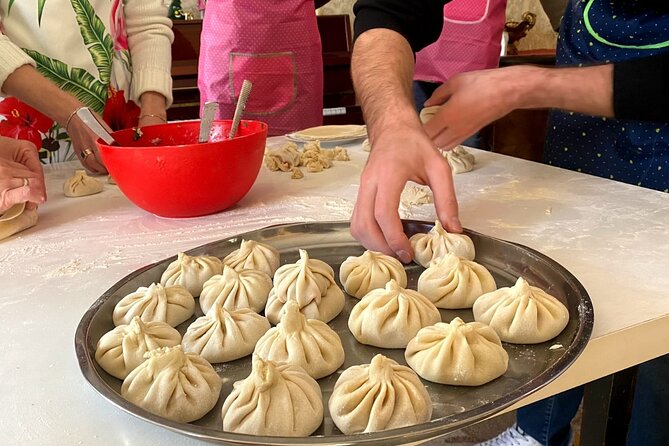
- Real family-kitchen cooking where you handle the dough, the fillings, and the final plating
- Six Georgian dishes you actually cook: khinkali, khachapuri, mchadi, sulguni, and more
- Homemade wine and chacha in a private home setting, served with the meal
- Small-group vibe with a maximum of 30 participants
- Practical recipes you can use again after you get home, including accommodations like pork-free options
Why a local family kitchen beats a tastings-only tour
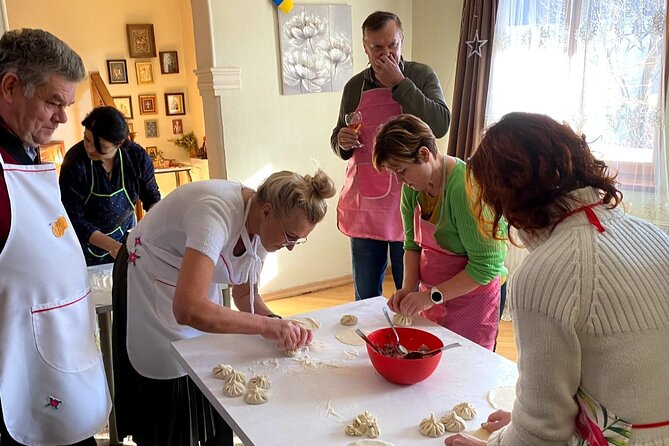
Tbilisi food tours can go two ways: a quick bite-and-keep-moving route, or an experience that slows down. This one clearly picks the slower, deeper option.
The value isn’t just that you eat Georgian specialties. It’s that you learn how they come together in a home kitchen—what the texture should look like, when to adjust, and what “good” tastes like before it hits the table. That matters, because Georgian food is often more technique than mystery. Once you cook it, you stop treating dishes like souvenirs and start treating them like food you can make.
And because it’s in a private home, the whole evening feels human-scale. You’re not dodging tour groups in a restaurant dining room. You’re in someone’s daily world. The evening also includes a shared start point where you can loosen up (board games, music, and a glass of wine), which sets the tone for an easygoing meal-making session.
You can also read our reviews of more food & drink experiences in Tbilisi

The 6:00 pm flow: from meeting spot to home cooking
The tour begins at 6:00 pm, with a first stop at the meeting area in Avlabari, Tbilisi. This part is designed as a warm-up. You can meet your group, enjoy good music, and even grab a drink right away. It’s not a formal classroom. It’s more like getting your bearings fast and letting the evening settle into a friendly rhythm.
Then you move on to the local kitchen. The core experience runs about 2.5 hours, focused on cooking, tasting, and conversation while everything is fresh and warm.
Finally, the tour ends back out at 45 Gigo Zaziashvili St, Tbilisi. Transport back from the local home isn’t included, so make sure you’re comfortable handling that last stretch on your own—taxi, rideshare, or a short ride on local transit depending on where you’re staying.
The cooking class: six Georgian classics you make with your hands
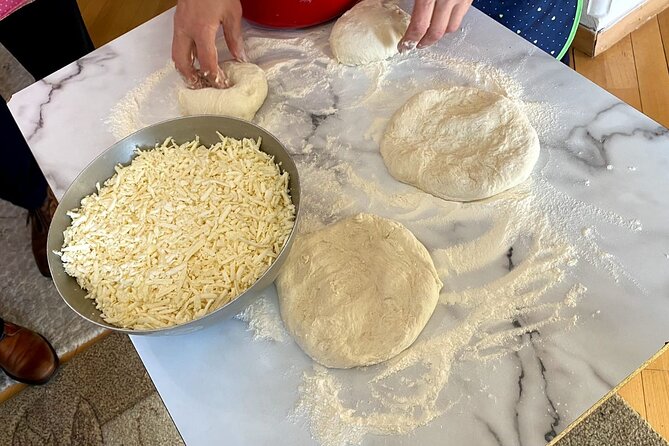
The meal is built around hands-on cooking, and that’s the whole point. You’ll learn multiple dishes and then eat what you made. The menu rotates through Georgian standards, including:
Starter favorites: cucumber-tomato salad and eggplant rolls
You’ll start with a cucumber and tomato salad, a simple dish that’s popular for a reason: it’s crisp, cooling, and a great warm-up for the heavier foods that follow.
Next comes Georgian eggplant rolls with walnuts. Eggplant can go from soggy to silky depending on technique, and walnuts bring that deep, nutty richness that makes Georgian vegetarian dishes feel satisfying rather than like an afterthought.
Mchadi: cornbread that belongs in the center of the table
Mchadi is Georgian cornbread, the kind that traditionally shows up as comfort food, often paired with beans and cheese. Even if you’ve had cornbread before, mchadi has its own identity—more character, more heart, and a taste that stands up to stronger flavors.
Sulguni: mild cheese that plays well with everything
You’ll work with sulguni, a semi-firm Georgian cheese. Mild cheeses sound boring until you taste them in context—warm, paired, and part of a dish-building system rather than treated like an isolated ingredient.
Khinkali: dumplings with the real Georgian attitude
Khinkali are Georgian dumplings, one of the country’s most famous foods. This is where you’ll see how Georgian cooking mixes comfort and craft. The dumpling isn’t just food; it’s a whole dining culture.
Also worth noting: vegetarian khinkali is available upon request. If you don’t eat meat, you can still build the full khinkali experience without compromising the theme of the evening.
Khachapuri: cheese-filled bread, learned the home way
You’ll also learn khachapuri, cheese-filled bread that’s instantly recognizable and deeply comforting. This dish matters because it teaches you how Georgia treats cheese—not as an add-on, but as a core ingredient that defines the dish’s personality.
Across the whole session, you’re not just tasting. You’re learning the order of operations: how ingredients connect, how dough and fillings behave, and what you should aim for when you plate.
What you actually eat: the “more food than expected” payoff
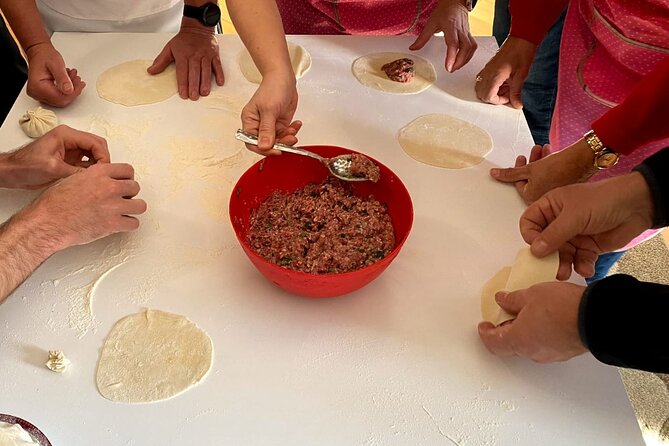
One repeated theme in the experience is that the portions can surprise you—in the best way. The structure is built so you cook, taste as you go, and then sit down to eat the full result.
You’re getting 6 different foods as part of the meal, plus water. The tour also includes homemade wine and homemade vodka (chacha). That combination turns the evening into a real dinner, not a light snack.
If you’re the type of traveler who wants a food experience that leaves you full and happy (not hungry and searching for a late kebab), this is the format that fits.
A practical tip: eat slowly at the start. Georgian meal pacing can be hearty, and the wine/chacha part makes it even easier to overdo it if you go hard early.
Wine and chacha in a private home: fun, but plan your pace
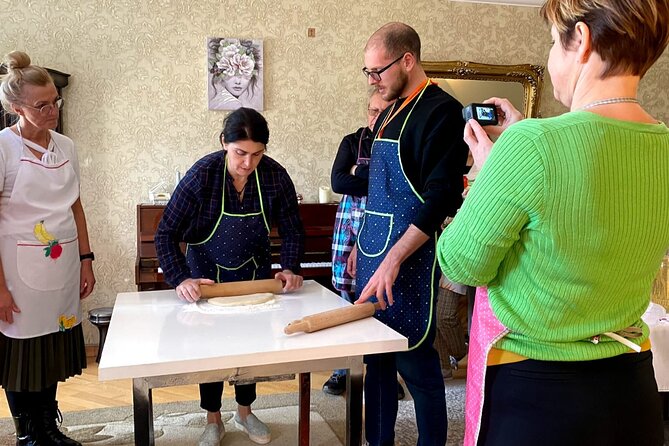
This isn’t wine-bar drinking. You’re drinking in a home setting, tied to the cooking and the meal. That changes the feel: it’s more about hospitality and sharing than making a photo-perfect checklist.
You’ll sample homemade wine and also chacha, which is Georgia’s famous grape-based spirit. The tour provides it as part of the included experience, so you’re not negotiating tastings or buying flights. You just work through the evening with it on the table.
Because alcohol is part of the event, keep your personal pace in mind. If you’re not a big drinker, you can still enjoy the cooking and tasting without treating every pour like a challenge.
Transport and timing: what matters (and what doesn’t)
The tour includes transportation from the meeting place to the local family, which is a big help, especially when you’re arriving after a long day and you don’t want to figure out suburban routes on your first evening.
What’s not included is the ride back from the local family. That’s the main logistical wrinkle. If you stay outside central areas, check your plan for a return before you go.
The tour is also designed to run in all weather conditions, so dress for Tbilisi temperatures and the walk/transfer time. It’s an evening experience, so even if the day is warm, the temperature can shift.
The group size tops out at 30, which tends to keep the vibe manageable for conversation and hands-on cooking.
Who this tour suits best (and who might want something else)
This works especially well if you want food that’s more than eating—it’s learning. You’ll get a lot from it if you:
- like cooking enough to enjoy getting your hands involved
- want to taste Georgian classics in a way you can repeat later
- enjoy conversational settings where you can ask questions about everyday life and food
It’s also a good choice for solo travelers. The structure is small-group oriented, and the meeting setup helps you settle in without awkward isolation.
If you’re the type who wants a fast, stop-and-go city sightseeing schedule, you may find the cooking-first approach a bit slower. But if you’re in Tbilisi for food (or just want one unforgettable dinner), this is a strong match.
Booking value: why $49 feels like more than a cooking ticket
At $49 per person for about 3 hours, you’re paying for much more than an instructor-led demo.
Included value includes:
- guide service
- transportation from the meeting point to the home
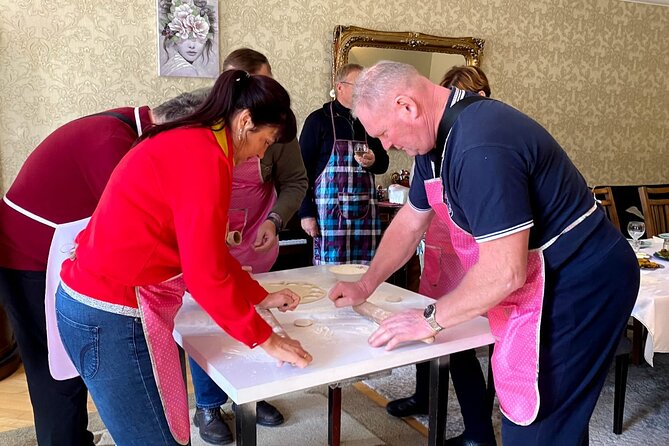
- cooking master classes inside a local family kitchen
- 6 different foods
- homemade wine
- homemade chacha
- water
- and admission ticket access to the experience
When you compare that to buying ingredients, paying for a private cooking session, and then finding your own drinks and transport, the math usually swings in favor of doing it this way. You’re basically paying for a full hosted meal plus skill-building.
One more practical point: confirmation is received at booking, and you get a mobile ticket. That cuts down on last-minute hassle.
Should you book this Tbilisi family cooking class?
Yes—if you want the kind of Tbilisi dinner that sticks with you. This is the rare food tour where you cook, taste, and eat what you made, with Georgian wine and chacha added in a home-hospitality setting. It’s also reassuring that vegetarian khinkali is available upon request, so you can keep the full experience.
Hold off if you’re short on time and need a quick hit, or if you already know you dislike cooking sessions. Also be ready for the one logistics gap: you’ll need to arrange your own return transport from the home.
If you’re coming to Tbilisi specifically for food—or you want at least one night where the meal becomes the memory—this is an easy yes.
FAQ
What time does the Tbilisi food tour start?
It starts at 6:00 pm.
How long is the experience?
It lasts about 3 hours.
How much does it cost?
The price is $49.00 per person.
What language is the tour offered in?
The tour is offered in English.
Does the tour include transportation?
Transport is included from the meeting place to the local family, but transportation from the local family back is not included.
What food will I cook and eat during the tour?
You’ll cook and eat multiple Georgian dishes, including khinkali and khachapuri, plus items like mchadi, sulguni, cucumber and tomato salad, and eggplant rolls with walnuts.
Is a vegetarian option available?
Yes. Vegetarian khinkali is available upon request.
Is the tour held in bad weather?
Yes, it operates in all weather conditions, so dress for the weather.
End of review
If you want, tell me your travel dates and where you’re staying in Tbilisi. I’ll suggest a simple plan for getting to Avlabari for the 6:00 pm start and handling the return ride after the home-cooking part.