REVIEW · MEDELLIN
Medellin: Comuna 13 Graffiti Tour, Cable Car & Street Food
Book on GetYourGuide →Operated by The best tours in Medellin SAS · Bookable on GetYourGuide
Graffiti, cable cars, and coffee in one loop. This Medellín Comuna 13 tour blends public transit, mountain views, and art with real meaning—then tops it off with Colombian street food and a drink at a high-view bar.
Two things I really like: the Metrocable ride for big city views and the way the guide brings the neighborhood’s murals to life (not just photos on a wall). One heads-up: you’ll be walking with some uphill stretches and stairs, so it may feel intense if you have mobility limits.
What you’ll get for the money is also unusually solid. You start with metro and cable, then switch to a bus and walking tour in Comuna 13 for the graffiti storytelling, a coffee tasting at a coffee-focused stop, and a Colombian arepa with cheese. The only real drawback is that the dance moment depends on weather, and the day’s pace can run active.
In This Review
- Key highlights (quick hits before you go)
- How Comuna 13, the Metrocable, and food fit together
- Getting there from Poblado: metro, Metrocable, and a public-bus switch
- The Metrocable ride: views plus a real transportation lesson
- Coffee Museum stop: what Colombian coffee processing actually means
- Comuna 13 streets: graffiti stories, music, and changing neighborhoods
- Dance show stop: a short cultural moment (weather-dependent)
- Colombian street food: one arepa with cheese and how to think about it
- Scenic views on the way: quick sight stops that change your perspective
- The viewpoint bar and your included drink: end the day with locals
- Price and value: why $18 can actually work here
- Pace, safety mindset, and who should skip this one
- Should you book this Comuna 13 graffiti tour?
- FAQ
- How long is the Medellín Comuna 13 graffiti tour?
- What does the tour cost?
- What transportation do you use during the tour?
- Where does the tour start and end?
- What food is included?
- Is a dance show included?
- Do you get a drink during the tour?
- How large is the group?
- What languages are available for the guide?
- Is the tour refundable if plans change?
Key highlights (quick hits before you go)
- Metrocable up into the hills: city views plus a simple lesson on how the transport system works
- Graffiti with context: guided explanations of what the murals represent and why the area changed
- Coffee tasting in a museum-style stop: how coffee processing works, plus a high-quality cup
- One arepa with cheese: a legit taste of Colombian street food without a long meal wait
- A bar with city views: included drink, plus a relaxed end to the tour
- Small group (max 10): easier to stay together on metro, cable, bus, and in the streets
How Comuna 13, the Metrocable, and food fit together
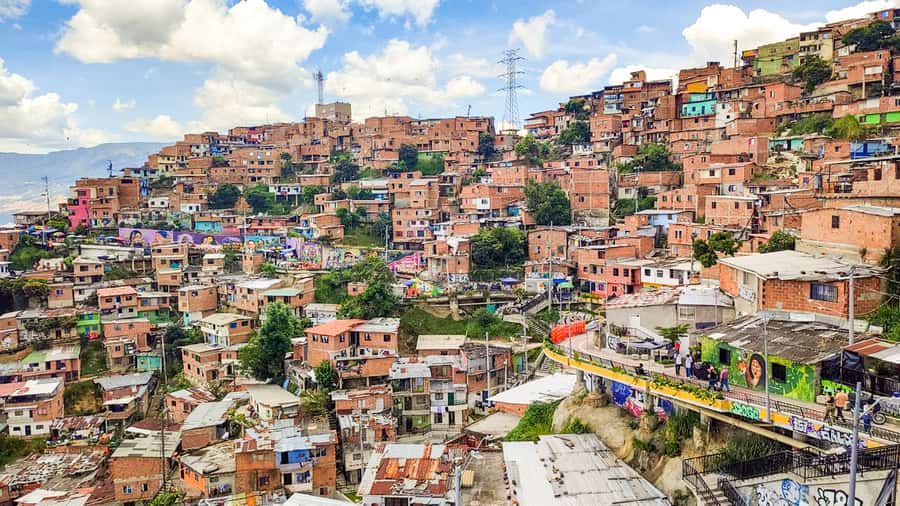
Comuna 13 can sound like just another “graffiti tour.” But the best part is how the route explains Medellín as a whole: how people move through the city, how the neighborhood transformed over time, and how art became a language locals use to tell their story.
You’ll feel the change from the moment you ride the public systems. The day isn’t only about seeing murals—it’s about understanding why this area matters and what life looks like on the ground, street-level, not from a viewpoint postcard.
And yes, you get your food stops too. The tour builds in small, timed breaks so you’re not stuck searching for lunch while everyone else is walking. You’ll leave with at least one clear Colombian flavor memory: coffee plus an arepa with cheese.
You can also read our reviews of more food & drink experiences in Medellin


Getting there from Poblado: metro, Metrocable, and a public-bus switch
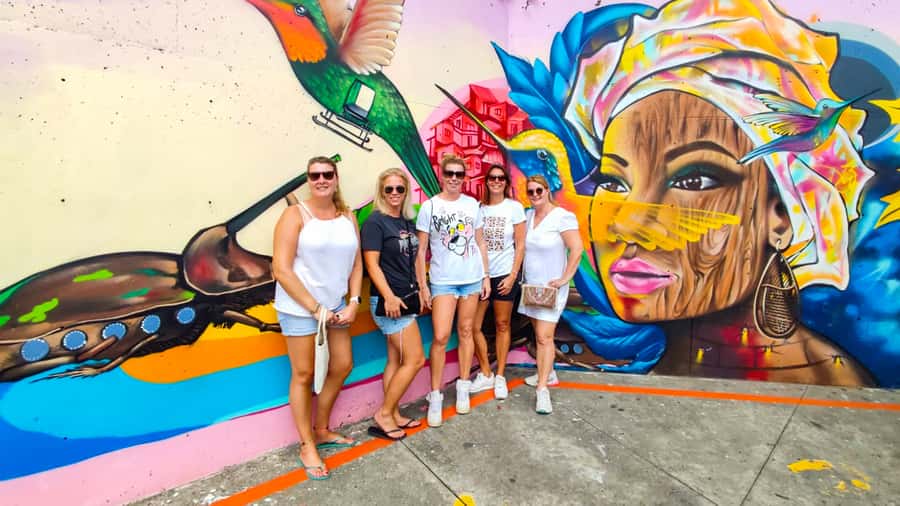
Most tours start around Poblado (meeting point can vary by option), and from there the plan stays very practical: use public transport like locals do.
You begin with the metro for about 15 minutes, then switch to the Metrocable (cable car) for roughly 20 minutes. That cable segment is the big visual moment—watching Medellín spread out as you climb. After that, you take a bus into the graffiti district area, where the walking portion starts.
Why this matters: using the metro and cable isn’t just scenic. It also helps you understand Medellín’s geography. You stop thinking of the city as “downtown vs. far away,” and start seeing it as connected routes climbing up the hills.
The Metrocable ride: views plus a real transportation lesson
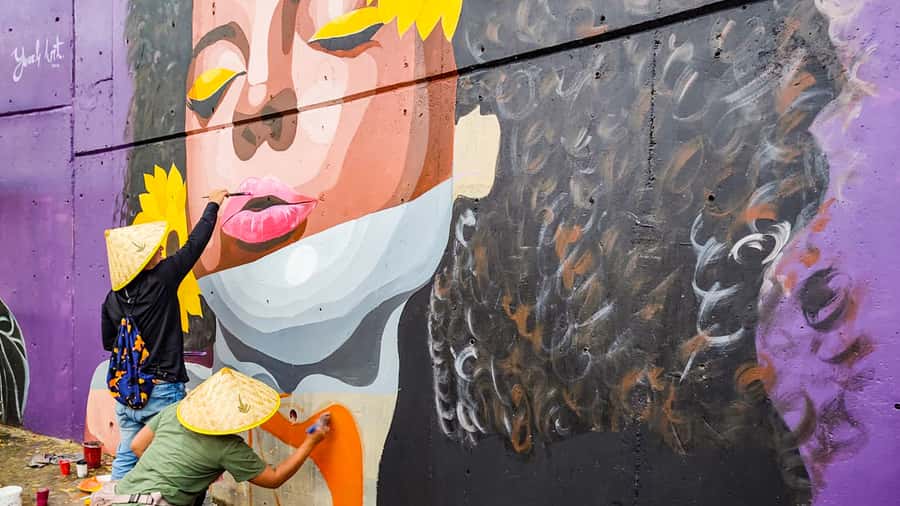
The Metrocable segment is where your brain goes quiet for a minute. You’re moving into the mountains and looking down at the city’s grid and neighborhoods like they’re layered maps.
The guide also uses this time to explain how the transport system works. That might sound small, but it makes a difference: later, when you’re walking through the district, you understand why certain viewpoints and routes make sense.
Plan for photos, but also plan to look around. The view isn’t just pretty; it helps you “place” Comuna 13 in the wider Medellín.
Coffee Museum stop: what Colombian coffee processing actually means
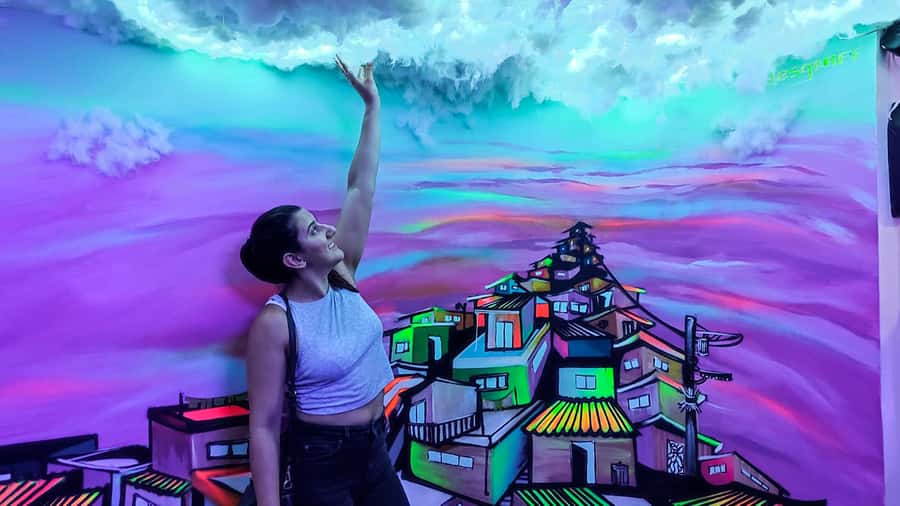
Before you hit the main street-art zones, you get a coffee stop in a coffee museum-style setting with a short tasting (around 10 minutes).
This isn’t only about sipping. You learn about processing—what happens to coffee from farm to cup, and the hard work connected to Medellín-area coffee production. Then you get to taste a high-quality cup, which is exactly what you want before you start walking and climbing in the neighborhood.
If you’re a coffee person, you’ll appreciate the structure. You’re not just handed a cup and sent on your way—you get enough context to understand why it tastes the way it does.
Comuna 13 streets: graffiti stories, music, and changing neighborhoods
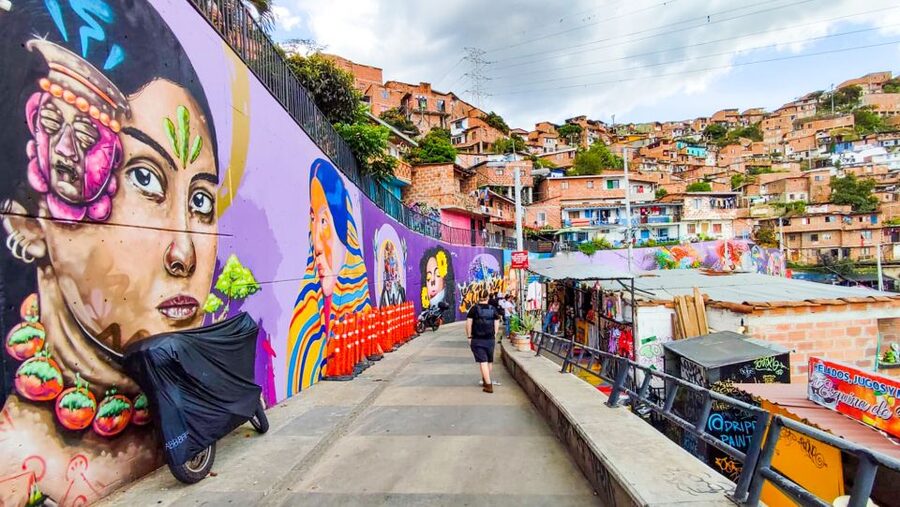
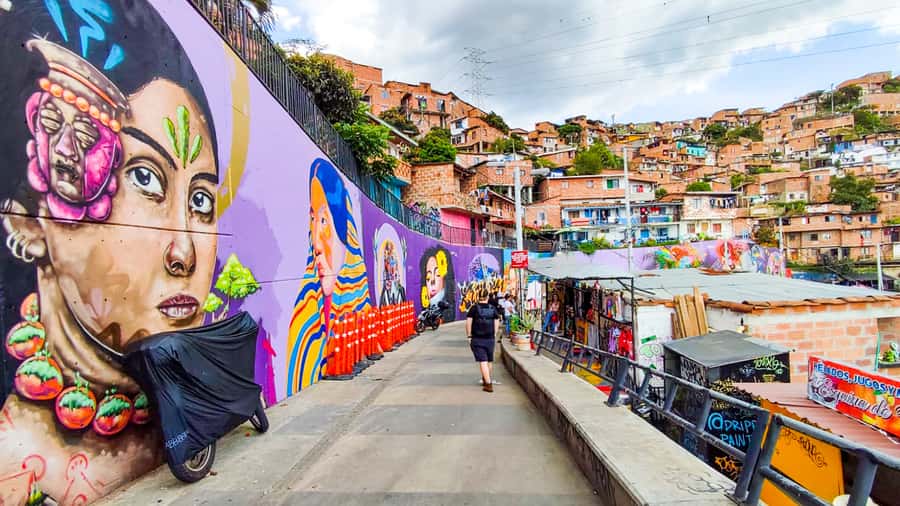
Once you’re in Comuna 13, the tour becomes a walking route through streets filled with expressive art. You’ll see multiple kinds of visuals, including graffiti and oil-painting-style pieces. There’s even mention of graffiti-printed clothes, which is a smart reminder that this art isn’t only for walls—it’s part of everyday identity.
The guide’s job here is crucial. The murals can look intense and impressive, but the meaning comes from the local explanations: what the artwork is saying and how it connects to people, community life, and the neighborhood’s evolution over time.
You’re also going to feel the neighborhood’s energy: music, dance moments, and the everyday flow of people living nearby. The atmosphere can be loud in a normal way, the kind of street noise that makes it feel real rather than staged.
A few more Medellin tours and experiences worth a look

Dance show stop: a short cultural moment (weather-dependent)
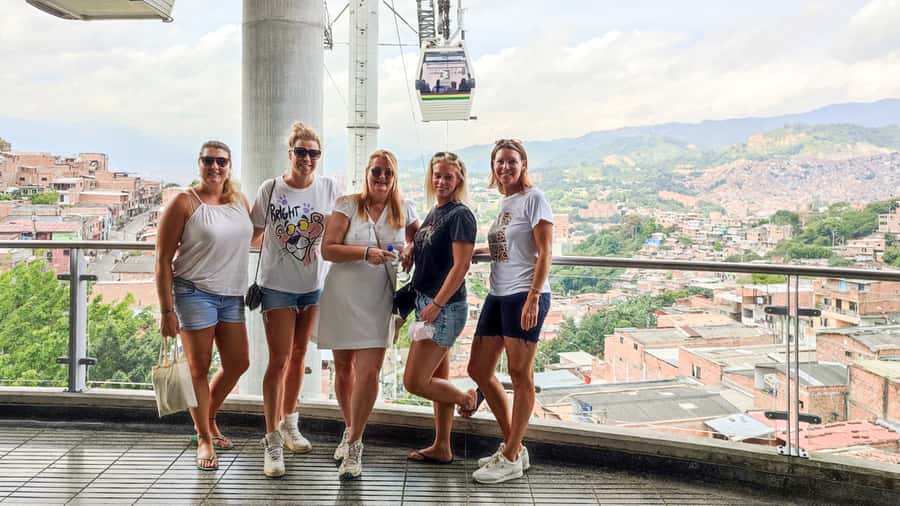
Part of the day includes a street dance show (about 15 minutes). The catch is simple: it depends on weather, so don’t treat it as guaranteed in every forecast.
If it does happen, it works well in the tour flow. It breaks up the walking and gives you a body-language way to understand the community’s expression. Even if you’re not a dance expert, it’s an easy, fun cultural moment at the right time.
If weather doesn’t cooperate, you’ll still be busy with the guided walking and art storytelling, so the tour won’t stall. Just expect that this specific piece may be adjusted.
Colombian street food: one arepa with cheese and how to think about it
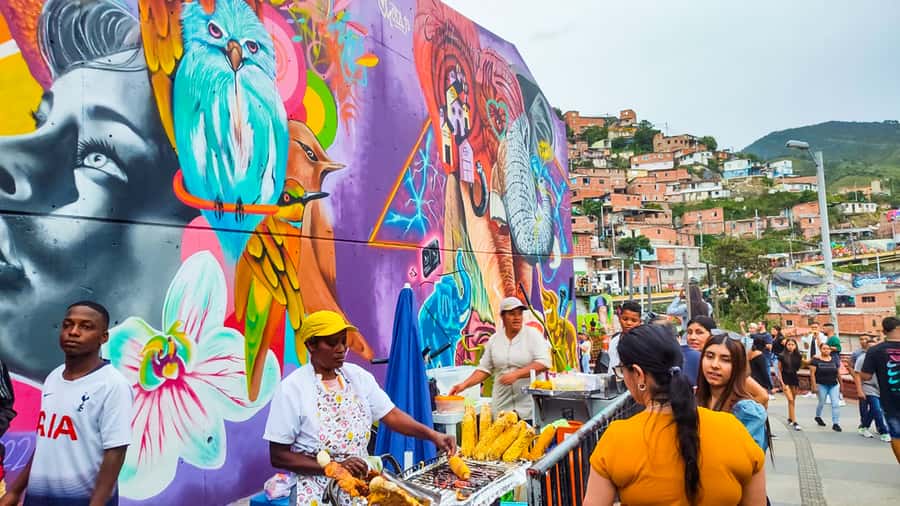
For food, the tour includes one arepa with cheese. It’s a classic Colombian street snack, and it’s timed so you’re not stuck waiting around hungry.
Here’s the practical take: it’s one arepa, not a full meal. If you eat big, treat it as a taste—enough to satisfy the street-food craving, not enough to replace a full lunch for everyone. If you’re the type who needs steady food, you’ll likely want to plan a later snack or meal after the tour ends.
Also note: the included drink comes at the bar later, not with the arepa. So you’ll get a coffee-and-arepa taste earlier, then a cold drink at the end.
Scenic views on the way: quick sight stops that change your perspective
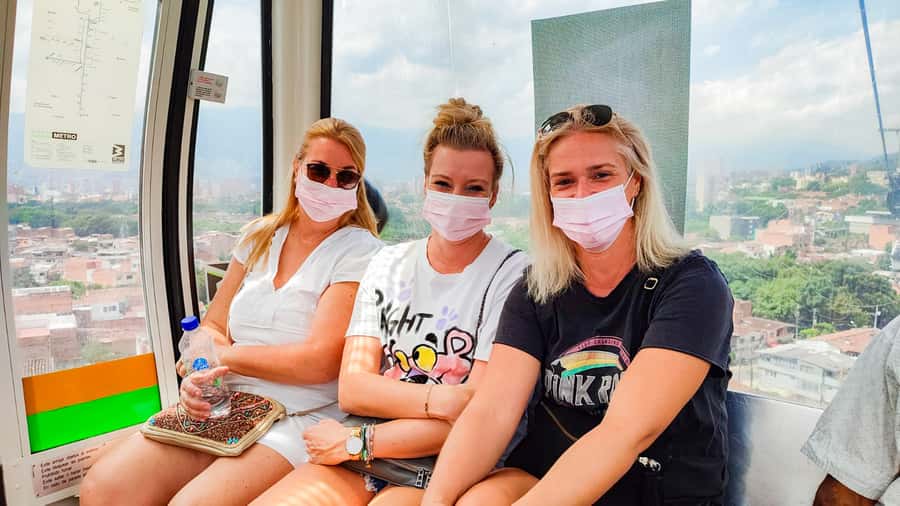
The route includes short viewing moments (about 15 minutes total spread through the later part of the walk). These stops matter because they reset your viewpoint.
Instead of only looking at art close-up, you get to look out and connect what you saw to the geography. It also helps when the streets get more compact or steep—you get a breather for your legs and your eyes.
The viewpoint bar and your included drink: end the day with locals
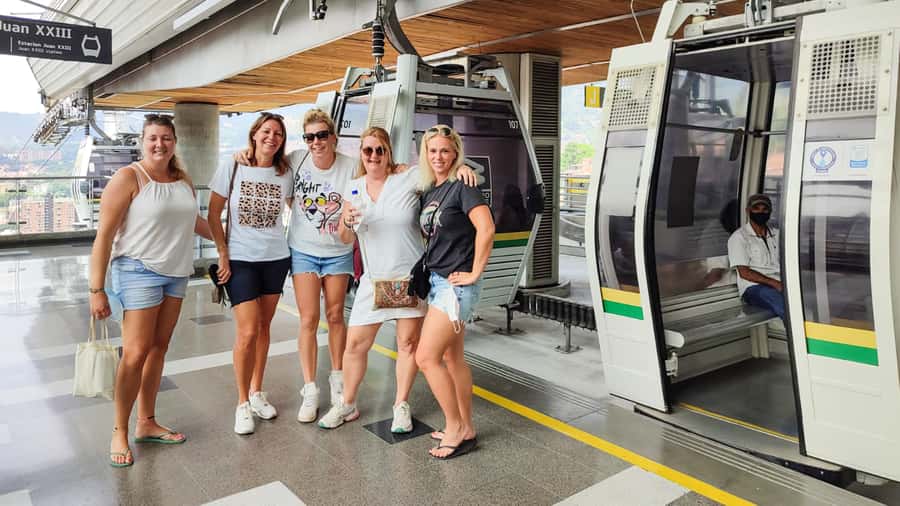
The tour ends with a bar stop that has an amazing view of Medellín. You get one included drink—beer, soda, or water—around 20 minutes.
This part is more than “free time.” It’s a chance to decompress after walking, compare notes with your small group, and ask your guide follow-up questions about Medellín—food, neighborhoods, or what to do next.
Also, this is where you’ll feel the day shift from active sightseeing to local-social time. You’re not hustling anymore. You’re just enjoying the city from above.
Price and value: why $18 can actually work here
At $18 per person for a roughly 4-hour tour, the real value is in what’s bundled, not just the price tag.
You get:
- A guide
- Metro + cable car + bus tickets
- A walking tour focused on graffiti explanations
- A coffee-tasting stop
- Street food (one arepa with cheese)
- A dance show stop (subject to weather)
- A bar with an included drink and city views
- Recommendations on what to do in Medellín next
That combination is hard to replicate cheaply on your own. If you try to DIY it, you’ll spend time figuring out transit, you may not get the meaning behind the murals, and you’ll likely still need to pay for separate entry-style moments like coffee stops.
The small-group size (max 10 participants) also adds value. You move faster, stay more controlled as a unit, and the guide can handle questions without leaving people behind.
Pace, safety mindset, and who should skip this one
Comuna 13 is not an easy stroll. Expect uphill walking and stairs during the route. If your legs don’t handle stairs well, plan carefully.
It’s also not suitable for people with mobility impairments and not recommended for people over 70 (per the tour’s guidance). If that describes you, it’s better to look for a different Medellín experience with less walking.
On the other hand, if you can handle a moderate amount of climbing and you like guided context, this tour fits well. You’ll get a full “Medellín on foot” feeling without guessing your way through transit.
Should you book this Comuna 13 graffiti tour?
If you want more than pretty street art photos, book it. This is a strong choice when you care about why murals exist, how a neighborhood changed, and how Medellín’s transport connects people to daily life.
I’d skip it only if you know stairs and uphill walking will be a problem for you, or if you’re looking for a low-effort tour with minimal movement. Otherwise, the combo of Metrocable views + coffee + arepa + included drink makes it a smart first pick for Comuna 13.
FAQ
How long is the Medellín Comuna 13 graffiti tour?
It runs for about 4 hours.
What does the tour cost?
The price is listed at $18 per person.
What transportation do you use during the tour?
You’ll use the metro and the Metrocable (cable car), then switch to a public bus, plus walking in Comuna 13.
Where does the tour start and end?
It starts at the metro station in Poblado, and you return to Poblado as the drop-off point. The exact meeting point can vary depending on the option booked.
What food is included?
You get 1 arepa with cheese.
Is a dance show included?
Yes, there is a street dance show stop, but it’s subject to weather conditions.
Do you get a drink during the tour?
Yes. You’ll have 1 included drink at a bar (beer, soda, or water).
How large is the group?
It’s a small group limited to 10 participants.
What languages are available for the guide?
The live guide is available in English and Spanish.
Is the tour refundable if plans change?
Yes. You can cancel up to 24 hours in advance for a full refund.