REVIEW · FRENCH RIVIERA
Entrance ticket to the Escoffier Culinary Art Museum
Book on Viator →Operated by Musée Escoffier de l'Art Culinaire · Bookable on Viator
French food history, served in one visit. I love how the museum turns Auguste Escoffier’s birthplace into a walkthrough of French gastronomy, and I also like the compact 18th-century Provencal house layout that keeps the visit around 45 minutes. The main drawback: an audioguide is not included, so you’ll need to rely on what’s on the walls (or pay separately for audio).
At French Riviera pace, this stop is an easy add-on. You’re paying $8.47 per person for a high-rated museum experience, and the ticket is delivered as a mobile ticket. With opening hours split into a morning block and a late-afternoon block, it’s best to pick a time when you won’t be rushing.
In This Review
- Key things to know before you go
- Why Auguste Escoffier’s Museum Feels Personal, Not Academic
- Entering the Musee Escoffier: What to Expect in Your 45 Minutes
- Inside the Rooms: Menus, Kitchen Furniture, and Sweet Sculptures
- The Temporary Exhibition: How to Get a Different Visit Year to Year
- Value on the French Riviera: $8.47 for a Focused Cultural Stop
- Timing That Works: Opening Hours and Seasonal Closure
- Getting There: Public Transport Convenience and Inside-Walk Reality
- Who Should Book This Museum—and Who Might Skip It
- Should You Book the Escoffier Culinary Art Museum?
- FAQ
- How long does the museum visit take?
- How much is the entrance ticket?
- Is an audioguide included?
- What are the opening hours?
- Is the ticket a mobile ticket?
- When is the museum closed for the year?
- What is the cancellation policy?
Key things to know before you go
- It’s only about 45 minutes. Plan it like a focused museum stop, not a half-day project.
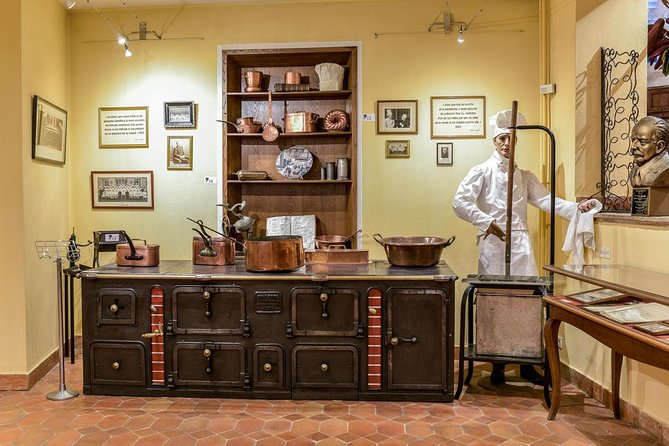
- Ten exhibition rooms over 300 m². You’ll move room to room without feeling stuck in one long hall.
- Expect personal history plus kitchen objects. You’re not just looking at plates and posters.
- There are sugar and chocolate sculptures. Yes, that means you’ll see food art beyond cookware.
- A temporary exhibition runs each year. One part of the visit can feel different from past trips.
- Audioguide isn’t included. If you prefer audio, budget for it.
Why Auguste Escoffier’s Museum Feels Personal, Not Academic
This museum works because it’s rooted in place. The Escoffier Culinary Art Museum is in Villeneuve-Loubet, inside the birthplace of Auguste Escoffier, a giant in French restaurant history. Instead of treating culinary arts like a distant topic, the museum uses the actual rooms it once occupied and frames cooking as culture, craft, and creativity.
You’ll also feel the museum’s intent: it’s not one of those huge “art for art’s sake” buildings where you lose track of why you’re there. It’s a culinary-focused museum of objects and stories—personal items, period kitchen furniture, and displays that connect technique to everyday life. That’s one reason it earns such a strong overall score and high recommendation rate: the experience is clear, readable, and satisfying.
The other thing I like for planning: it’s designed to be doable. Forty-five minutes is long enough to actually see, but short enough that it won’t hijack your Riviera day.
Entering the Musee Escoffier: What to Expect in Your 45 Minutes
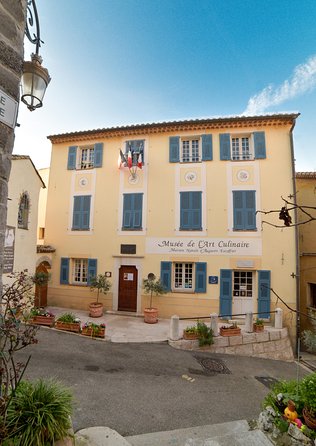
Your visit centers on a single stop: the museum itself. After you arrive, you’ll move through multiple exhibition rooms that cover about 300 m² in total. The pacing matters here. With a roughly 45-minute time frame, you should expect a “see the main ideas, then choose what you linger on” kind of experience.
A practical way to approach it:
- Start by scanning the room for the big themes (personal objects, kitchen furniture, sweet sculptures, menus).
- Then pick one section per room to read slowly.
- Leave yourself a little time at the end to re-check the items that caught your eye.
If you’re the type who reads every label cover to cover, you can still enjoy it—but you’ll likely need to move faster than you would in a larger museum. The lack of an included audioguide makes this even more important. Without audio, your best tool is your attention.
Also keep in mind the museum notes moderate physical fitness. That doesn’t mean you need athletic abilities, but you should plan on walking around and standing to read displays.
Inside the Rooms: Menus, Kitchen Furniture, and Sweet Sculptures
What makes this place feel worth the ticket is the mix. It isn’t only about the man or only about food. It’s about how cooking communicates.
Here’s what you’ll encounter as you move through the ten exhibition rooms:
- Souvenirs and personal objects of Escoffier
These details help you connect the legend to a real person. You’ll see how the museum tells a human story: craft, influence, and personality.
- Kitchen furniture of yesteryear
This is the “how the job got done” side. Even if you don’t know every tool name, seeing period kitchen furniture gives context for how meals were planned and prepared.
- Sugar and chocolate sculptures
These displays are a reminder that French culinary art includes showmanship and precision, not just flavor. They also make the museum visually memorable.
- An impressive collection of menus
Menus are one of the most practical sources you can look at for gastronomy history. They show choices, structure, and how restaurants packaged an experience.
All of that sits inside an older Provencal house. That matters more than it sounds. The rooms help the objects feel like they belong to a working world, not a sterile gallery. It gives your brain a better sense of scale and function.
One small consideration: if you’re mostly interested in modern cooking trends, you may want to pair this with something contemporary in the area. This museum is clearly about French culinary heritage.
The Temporary Exhibition: How to Get a Different Visit Year to Year
Each year, the museum dedicates time to a temporary exhibition with a specific theme. That means you don’t just come for permanent rooms. One portion of your visit can shift, and that keeps repeat visits interesting.
For your planning, this is useful in two ways:
- If you’re a food-history person, you can treat the yearly theme as the “special reason” you came.
- If you’re visiting once, you can still hope you’ll catch the current temporary focus along with the core displays.
Unfortunately, the exact temporary theme isn’t listed in the details you provided. So your best move is simple: when you arrive, glance at what’s on view that day so you know where to spend your slow time.
Value on the French Riviera: $8.47 for a Focused Cultural Stop
Let’s talk value in real terms. At $8.47 per person for an about-45-minute visit, this is a low-cost way to add depth to a Riviera day. You get multiple exhibition rooms (ten), a total space of about 300 m², and a highly culinary-specific subject that’s hard to find elsewhere.
This matters because many Riviera activities are expensive and time-heavy. Here, the structure works with your day: you can fit it between beach time and dinner without feeling like you missed a half-day of sightseeing.
It’s also a smart ticket to grab in advance if you like to move with confidence. The experience is commonly booked about 29 days in advance on average, which is a hint that good time slots can go quickly during busy periods.
Two planning notes that affect your satisfaction more than they look:
- Audioguide isn’t included. If you love audio commentary, budget for it.
- Opening hours have two windows. Plan your route so you don’t arrive during the closed gap.
Timing That Works: Opening Hours and Seasonal Closure
The museum’s opening hours are:
- Monday to Sunday: 10:00 AM–1:00 PM and 2:00 PM–6:00 PM
So you’ll want to build your day around those breaks. If you’re doing other Villeneuve-Loubet or nearby Riviera stops, try to arrive right at the start of a block. That way you don’t lose time waiting, and you can enjoy the full flow of rooms.
One big seasonal heads-up: the museum has an annual closure from December 1, 2025 to January 8, 2026 inclusive. If your trip falls in early winter, check your dates carefully before you rely on this as a sure thing.
Getting There: Public Transport Convenience and Inside-Walk Reality
The museum is near public transportation. That’s a real benefit on the French Riviera, where parking can be hit-or-miss depending on the day.
Inside, the visit lists a moderate physical fitness level. You’re not being asked to do anything extreme, but you should expect some walking around and time standing while you read. If you need frequent breaks, consider arriving in a calmer time window rather than the busiest hour.
Who Should Book This Museum—and Who Might Skip It
This museum is a great fit if you:
- love food history and want something more specific than a general art museum
- enjoy seeing how restaurants and kitchens shaped culture
- like a short museum stop that doesn’t swallow your entire day
- appreciate objects: menus, furniture, and food craft details
You might not love it as much if you:
- want a lot of hands-on activities (the details provided focus on displays and rooms)
- prefer audio-heavy explanations and don’t want to pay extra for an audioguide
- need a flexible, long wandering experience, since the visit runs about 45 minutes
The best match is someone who wants a focused, well-organized culinary story in an authentic setting.
Should You Book the Escoffier Culinary Art Museum?
I’d book it if you’re on the French Riviera and you want one ticket that adds real depth without eating up your schedule. For $8.47, you get a rare culinary-art museum experience tied to Auguste Escoffier’s birthplace, with ten rooms and memorable displays like kitchen furniture, menus, and sugar and chocolate sculptures. It’s also consistently rated extremely high, with a recommendation rate of 100% and an overall 4.9 score.
Only pause if you strongly prefer audio interpretation and don’t want to add an audioguide cost, or if your travel dates fall inside the December–January closure window. If those aren’t issues, it’s an easy yes for a smart, budget-friendly cultural stop.
FAQ
How long does the museum visit take?
The visit is approximately 45 minutes.
How much is the entrance ticket?
The entrance ticket is $8.47 per person.
Is an audioguide included?
No. Audioguide rental is not included.
What are the opening hours?
Monday to Sunday: 10:00 AM–1:00 PM and 2:00 PM–6:00 PM.
Is the ticket a mobile ticket?
Yes, the ticket is provided as a mobile ticket.
When is the museum closed for the year?
The museum is closed annually from December 1, 2025 to January 8, 2026 inclusive.
What is the cancellation policy?
Free cancellation is available up to 24 hours in advance of the experience’s start time for a full refund.