REVIEW · ATLANTIC COAST
Discovery of Moroccan Culinary Heritage, History and Secrets
Book on Viator →Operated by Moroccan Culinary Arts Museum · Bookable on Viator
A real riad kitchen turns food history into something you can taste. This 2-hour experience at the Moroccan Culinary Arts Museum blends a museum walk with hands-on lessons in bread, spice use, cooking technique, and the rhythm of Moroccan meals. You get a practical, step-by-step look at how dishes like tajines and couscous come together, not just a lecture.
I especially love the teaching setup: 34 kitchen stations, a friendly kitchen team, and a Dada instructor who focuses on the little choices that make Moroccan food work. I also like the pacing, because you balance cooking with an actual bread oven visit and a traditional Moroccan tea moment. That mix helps everything click.
One thing to consider: language and drink inclusions can be inconsistent day to day. The experience is described with French or English interpretation, but I’d still plan to ask clearly about tea/coffee and any water or language details on arrival, especially if you’re set on English instruction.
In This Review
- Key Highlights You’ll Notice Fast
- Entering The Riads-Within-A-Museum Experience (Where Learning Feels Natural)
- The Moroccan Culinary Arts Museum: A Palace-Style Primer Before You Cook
- Bread-Making and the Bread Oven Visit: The First Big Taste Lesson
- The Spice Route: Seeing the Herbalist Area Where Flavor Starts
- Cooking With the Dada: Tajines, Couscous, and the Real Skill of Balancing
- Moroccan Tea Ceremony: Why It’s More Than a Break
- Terrace Dining and Optional Moroccan Wine Pairing
- Price and Value: Is $69.79 Worth It?
- Practical Tips for Getting the Most Out of Your 2 Hours
- Who Should Book This Cooking and Culinary Heritage Experience
- Should You Book This Tour?
- FAQ
- How long is the experience?
- Where is the meeting point?
- Is lunch included?
- Are alcoholic beverages included?
- Is there bread making as part of the experience?
- Do you visit where spices come from?
- What cooking skills will I learn?
- How large are the groups?
- Is there language support?
- What’s the cancellation and confirmation timing?
Key Highlights You’ll Notice Fast
- Bread oven + herbalist stop: you see where flavor ingredients start, not just where they end up on a plate.
- 34-station kitchen format: easier to learn, easier to follow, less waiting around.
- Spice dosing lessons: you learn how Moroccan cooks measure and balance spices for real results.
- Moroccan tea ceremony: a cultural reset that also prepares your palate for tasting.
- Terrace dining with Moroccan dishes: you eat what you made, in a setting built for lingering.
- Optional Moroccan wines: if you want pairing, it’s offered, but alcohol isn’t automatically included.
Entering The Riads-Within-A-Museum Experience (Where Learning Feels Natural)
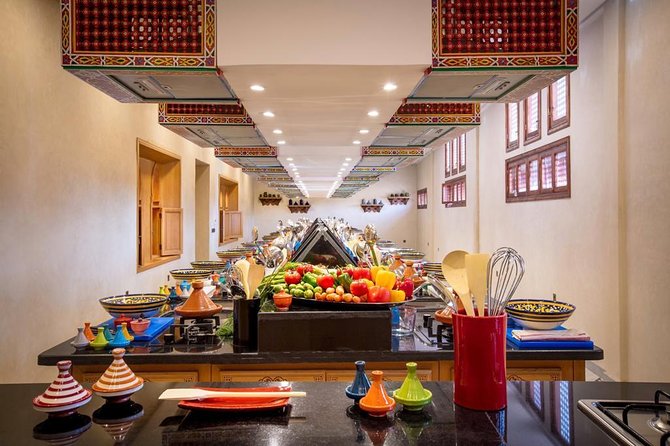
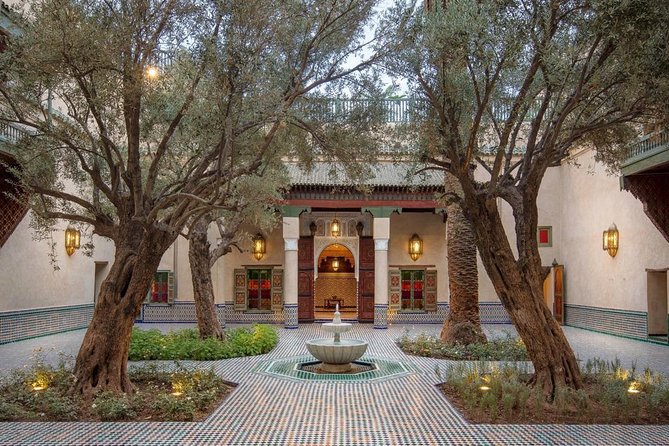
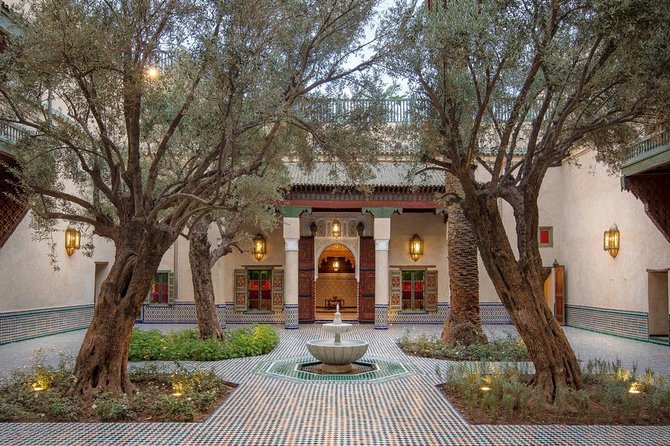
Marrakech can be noisy. This experience is built to slow things down. You start at the Moroccan Culinary Arts Museum in a restored riad setting, then head up to a second-floor setup that’s designed for instruction.
What matters for you is the vibe: this is not a cramped cooking show with one pan and a crowd. The space uses 34 kitchen stations, plus a Moroccan living-room style area to orient you. That means you can actually watch technique, then try it without losing the thread.
The museum setting also helps. When cooking is paired with a short history-style walk, you’re not just copying steps. You’re learning why those steps exist, from bread culture to spice sourcing to how Moroccan meals are structured.
The Moroccan Culinary Arts Museum: A Palace-Style Primer Before You Cook
Even if your main goal is the cooking class, the museum time is more than filler. It gives you context for what you’re about to make, and the setting is part of the appeal.
The museum lives in one of the most beautiful restored palace spaces in the area, and it’s positioned near the Bahia Palace zone. That proximity is practical: you can plan it alongside other sights without wasting time crossing town.
Inside, you’ll find a mix of displays and stations that explain Moroccan food methods, presentation, and historical context. Some people find the physical displays less exciting than the building itself, but the overall structure still works well for food-focused travelers. You leave with more vocabulary in your head, so the cooking lesson feels more meaningful.
Also, if you like quiet spaces, this one tends to feel calmer than the bigger, busier palace stops. It’s a useful breather in a city where it’s easy to get sight overload.
Bread-Making and the Bread Oven Visit: The First Big Taste Lesson
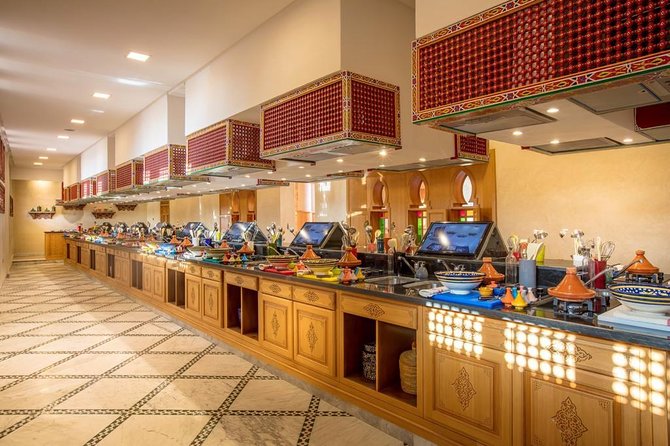
Bread is the backbone of many Moroccan meals, so starting there is smart. You get a Moroccan bread-making demonstration, then you visit the bread oven area where the process connects to local daily life.
This is where the experience gets hands-on in a way a lot of classes skip. Bread isn’t just a side you order. It’s part of how people gather, cook, and serve. Watching the process also trains your eye: how dough behaves, how heat affects outcomes, and why timing matters.
For you, the key value here is technique you can carry home. You might not recreate a Moroccan oven in your kitchen, but you can understand the logic behind dough handling and cooking temperature. That makes the rest of the meal prep easier, because you start thinking like a cook rather than a diner.
If bread is one of your favorite things to eat while traveling, this segment is a highlight. It gives you that satisfying feeling of putting a name to something you’ve been tasting all along.
The Spice Route: Seeing the Herbalist Area Where Flavor Starts
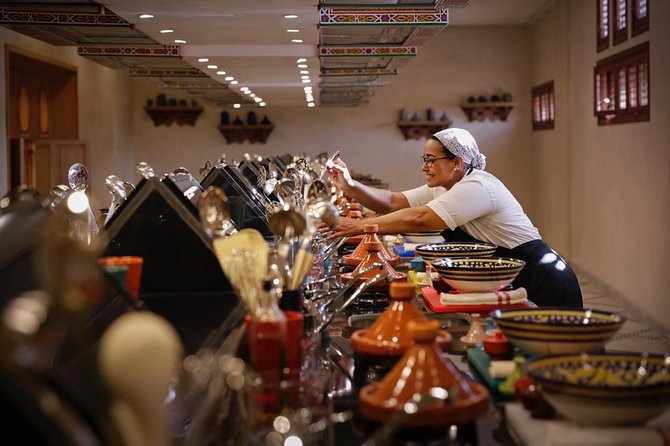
Moroccan spices have a reputation, but tasting and cooking are different from reading about them. That’s why the stop at the herbalist of the district where the spices come from is such a helpful addition.
You’re not just collecting scents for fun. You’re learning that spice use has sourcing and balancing behind it. The goal is practical: you’ll later use this knowledge in the kitchen, where the Dada teaches spice dosing rather than tossing in a generic pinch.
Even if you’re not a “spice person,” this works because it’s connected to real dishes you’ll prepare. You learn what different spices do to aroma and flavor, and how Moroccan cooking builds depth through proportion.
And if you’ve ever wondered why some tagines taste perfectly warm while others taste flat or overly sharp, this is the part that answers that. Proportion is the secret. Not just the spice list.
Cooking With the Dada: Tajines, Couscous, and the Real Skill of Balancing
Now we get to the main event. The cooking class is taught by a traditional cook, a Dada, who reveals cooking and seasoning secrets in a way that’s aimed at results. This is where you practice cooking techniques and learn how Moroccan meals are assembled.
The experience is focused on Moroccan culinary styles, including how to prepare tajines and couscous. You also get broader “secrets” tied to spice use, baking, and cooking tricks that make the difference between food that tastes good and food that tastes right.
What you should look for during the class:
- Ask how spice dosing changes based on ingredient type.
- Watch the stages, especially timing and heat.
- Pay attention to texture cues, not just time.
The advantage of having a dedicated teacher and a staff support system is that you don’t get stuck when something doesn’t match what you expected. Even the structure of the kitchen helps here: with multiple stations, the teaching team can keep an eye on more than one person at a time.
One more practical note: some days run mixed language support. The experience is set up with a French or English interpreter for the course introduction, so if your preference is English, confirm it early. Clear communication is the difference between a confident plate and a confusing one.
Moroccan Tea Ceremony: Why It’s More Than a Break
Between cooking and eating, you’ll do a Moroccan tea ceremony. This isn’t just a beverage stop. In Moroccan food culture, tea is part of hospitality and timing, and it helps reset your palate after spice work.
You also get a cultural lesson in how tea fits the flow of a meal. You’re learning the social pacing that comes with cooking at home. That matters because Moroccan meals are not just about individual dishes. They’re about sequence, conversation, and sharing.
For you, tea also becomes a practical tasting tool. You’ll often notice how flavors settle after warm mint tea, especially if you’ve been smelling spices for a while.
Terrace Dining and Optional Moroccan Wine Pairing
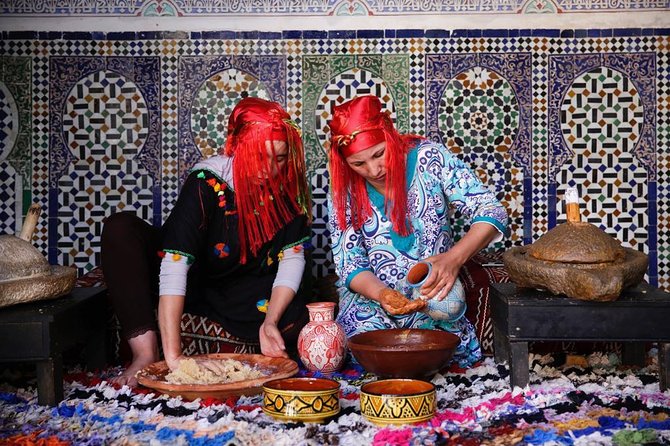
After cooking comes the part you’ll remember later: eating what you made. You can enjoy the dishes you prepared on the terrace, which makes the meal feel more like a lived-in moment and less like a classroom wrap-up.
The meal is part of what you’re paying for, and it’s designed around what you learned. Included with the experience are lunch, plus bottled water, and coffee and/or tea.
Alcohol is where you need to be careful. The experience says alcoholic beverages are not included, but it also notes that you can have Moroccan wines with the tasting. That means wine is likely optional or add-on. If you want wine, clarify on the day and decide based on how it changes the price for your booking.
If you don’t drink alcohol, don’t worry. You’ll still have the coffee/tea and the meal itself, so you aren’t left out of the tasting experience.
Price and Value: Is $69.79 Worth It?
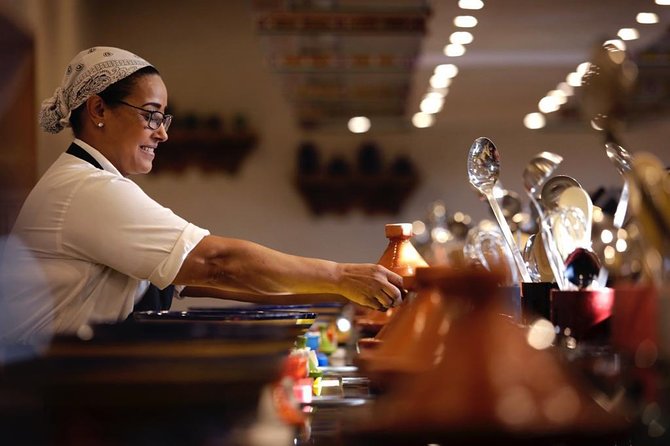
At $69.79 per person for about 2 hours, the value depends on what you want from Marrakech: a quick food story, or real cooking skill plus context.
Here’s why it can be worth it for the right traveler:
- You’re paying for a full teaching structure: 34 station kitchen, guided instruction, and a traditional teacher (Dada).
- You get multiple learning inputs, not just one: bread demo, bread oven visit, herbalist spice area, cooking class, tea ceremony, then eating what you made.
- Lunch is included, plus water and coffee and/or tea. That reduces the “hidden costs” that hit some food tours.
Where you should be cautious:
- If you’re expecting alcohol to be automatically included, it’s not. Wines are optional.
- If you want strict English-only instruction for every segment, language support is not guaranteed in every situation. Do a quick check at arrival.
I think this price makes sense if you’re the type who likes learning through action. If you only want a museum look, you could find a cheaper museum-only plan. But if cooking + bread + spices are the goal, this turns the time into something you can carry home.
Practical Tips for Getting the Most Out of Your 2 Hours
This experience is short, so your success depends on showing up ready to participate. Here are a few practical moves that will help.
First, arrive a bit early so you can settle in. You’re meeting at the Moroccan Culinary Arts Museum and then using the riad’s internal flow, so you’ll want a calm start.
Second, if you care about language, confirm. The introduction is done with a French or English interpreter, but the cooking instruction itself may vary based on the day. Ask for clarity on the language of the cooking portion.
Third, lean into the spice work. If you try to skip the spice dosing lessons, you’ll lose the biggest “why” behind Moroccan flavor. Even if you can’t buy all the spices at home, you’ll learn how to think about balance.
Finally, plan to enjoy lunch without rushing. Because you’re eating what you cooked, you’ll get more from it if you treat it like the main event, not the end of an errand.
Who Should Book This Cooking and Culinary Heritage Experience
This is a strong fit if you are:
- A foodie who wants more than tasting and wants technique.
- The kind of traveler who loves bread, spice, and home-style cooking methods.
- Traveling with a partner or small group who enjoys shared prep and shared meals.
- Curious about Moroccan hospitality rituals, like tea, not just dishes.
It may be less satisfying if you:
- Want a long, slow museum day. This one runs quickly because the time is focused on hands-on cooking.
- Prefer purely observational tours and don’t want to cook or handle ingredients.
- Are strict about inclusions like tea/coffee and language timing. Double-check those at the start.
Should You Book This Tour?
If you want a Marrakech food experience that is practical, structured, and connected to real ingredients, I’d say book it. The best part is the combination: bread oven + spice dosing + cooking lesson + tea ceremony, then eating your results on the terrace.
Just go in with two smart expectations: wine is optional, and language support can vary. If you check those details early, you’ll likely come away feeling like you learned something you can actually use, not just something you watched.
FAQ
How long is the experience?
It lasts about 2 hours.
Where is the meeting point?
It starts at the Moroccan Culinary Arts Museum, Rue Riad Zitoun el Jdid, Marrakesh 40000, Morocco.
Is lunch included?
Yes. Lunch is included, along with bottled water, plus coffee and/or tea.
Are alcoholic beverages included?
No. Alcoholic beverages are not included. Moroccan wines may be offered with the tasting as an optional add-on.
Is there bread making as part of the experience?
Yes. There is a demonstration of Moroccan bread making, and you also visit the bread oven.
Do you visit where spices come from?
Yes. You visit the herbalist area of the district where the spices come from.
What cooking skills will I learn?
You’ll take part in a Moroccan cooking class focused on tajines, couscous, and other Moroccan culinary techniques and spice use.
How large are the groups?
The experience has a maximum of 34 travelers.
Is there language support?
You receive an introduction with a French or English interpreter.
What’s the cancellation and confirmation timing?
Free cancellation is available up to 24 hours in advance for a full refund. Confirmation is received at booking time unless you book within 1 day of travel, in which case confirmation is subject to availability and received as soon as possible.