REVIEW · BARCELONA
Barcelona Side Streets Tapas & Wine Tour
Book on Viator →Operated by Eating Europe Food Tours Rome · Bookable on Viator
One good meal can turn into a whole city lesson. This small-group Barcelona Side Streets tapas and wine tour strings together Gothic Quarter landmarks, El Born alleyways, and Barceloneta’s seafood streets, with tastings plus cultural context as you go. I like that you get real guide-time (not just a food stop-and-go), and I also like the simple, practical mix of wine and regional bites paired to each place. One thing to weigh is the price: you pay a premium for the guide and the “story,” so come hungry but expect portions that are tapas-sized, not a full restaurant feast.
The tour starts at Plaça de la Mercè and ends at Plaça de la Barceloneta, using a walk-first route through some of Barcelona’s most photogenic neighborhoods. I especially enjoy that the stops aren’t only famous plates; you also hear why each dish and drink fits the local food culture, like the traditional way wine is served using a porrón. The main drawback to consider is the walking: it’s built around multiple short tastings, so comfortable shoes are a must.
In This Review
- Key Things I’d Note Before You Go
- Barcelona’s Side Streets Taste Test: What This Tour Actually Feels Like
- Where It Starts (and Why It’s a Smart Place to Begin)
- Stop-by-Stop: What You’ll Eat and Drink (and What Each Place Teaches)
- Stop near the Basilica de la Mercè: Setting the Tone in the Gothic Quarter
- Perikete: Aubergine Bites and White Wine from a Traditional Porrón
- Euskal Etxea Taberna in El Born: Pintxos and Vermut with a Basque Angle
- Restaurant Can Ramonet in Barceloneta: Fideuà in a 1700s Setting
- Forn de pa Balboa: Sweet Finish from a Citywide Bakery
- The walking segment between food stops: El Born and the sea edges
- Price and Value: Is $114.93 Worth It?
- Drinks, Portions, and the No-Extra-Drinks Trick
- Food Culture for People Who Want More Than a Plate
- Who This Tour Suits Best (and Who Might Prefer Something Else)
- Practical Tips So You Don’t Trip Over the Details
- Should You Book? My Decision Shortcut
- FAQ
- How long is the Barcelona Side Streets tapas and wine tour?
- Where do I meet and where does the tour end?
- What food and drinks are included?
- Are extra drinks included, or do I need money for more?
- Can the tour handle vegetarian or gluten-free diets?
- Is this tour a small group?
Key Things I’d Note Before You Go
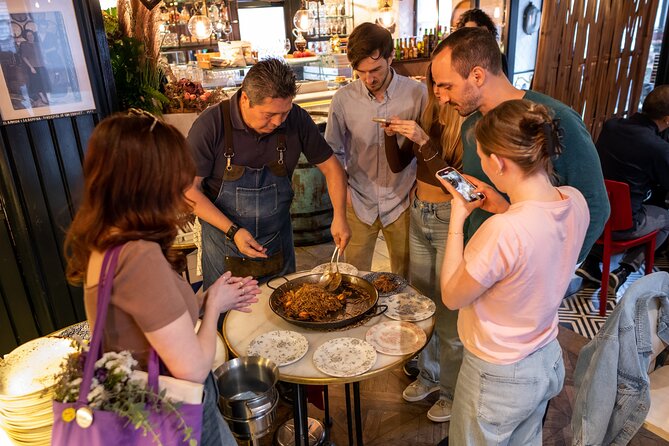
- Max 12 people means you’ll usually get time for questions instead of racing ahead.
- English-speaking guides make the cultural notes easy to follow, even if your Catalan is zero.
- Tastings include Catalan standouts like Fideuà (noodle-paella style) and sweet closure with a traditional pastry.
- You’ll sip wine in the traditional style with a porrón, plus Basque vermut and cava.
- The route naturally connects major sites like Santa Maria del Mar and the Basilica de la Mercè, plus seaside sights near Port Vell.
Barcelona’s Side Streets Taste Test: What This Tour Actually Feels Like
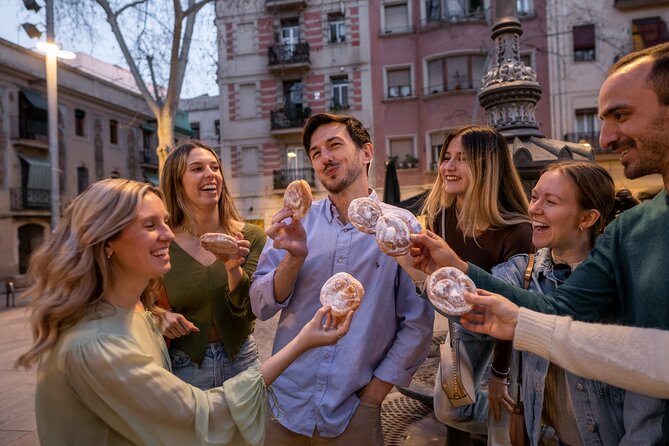
This is the kind of tour that works best when you like two things at once: eating local food and walking off your comfort zone in small doses. You’ll spend about 3 hours 30 minutes moving through several neighborhoods, stopping for short tastes rather than sitting down for a long meal. That format keeps the energy up, but it also means you should treat it like a sampler, not a full dinner.
What makes it feel different from a basic tapas crawl is the structure. Each stop pairs a drink with a specific bite, and the guide explains the cultural angle—how Catalonia’s flavors and traditions show up in everyday dishes. If you’ve ever eaten a dish and thought, Okay, but why this, here, and now?—this is built for that exact question.
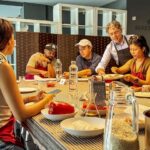
The group size matters too. With a maximum of 12, the tour doesn’t feel like you’re part of a conveyor belt. It’s easier to ask, get recommendations, and keep the pace comfortable. A bunch of people also highlight guides by name—like Sky and Lindsey—because they mix the city story with the food conversation, rather than reading from a script.
You can also read our reviews of more wine tours in Barcelona

Where It Starts (and Why It’s a Smart Place to Begin)
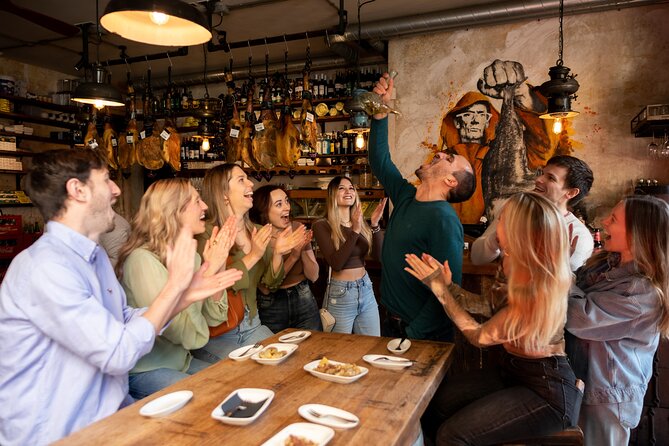
You meet at Plaça de la Mercè, in Ciutat Vella. This area puts you right in the Gothic Quarter zone, where medieval Barcelona still feels close. Starting here is a good move because the tour quickly ties landmarks to food culture. You’re not walking random blocks—you’re walking a route that makes the neighborhoods make sense as you go.
The end point is Plaça de la Barceloneta, which is convenient if you want to keep eating or just watch the sea for a while afterward. And since the tour is near public transportation, you’re not locked into a complicated schedule if you need to reposition for dinner plans.
One practical tip: the meeting and ending points are different, so plan your evening around a finish near the waterfront rather than expecting to return to the exact start location.
Stop-by-Stop: What You’ll Eat and Drink (and What Each Place Teaches)
Stop near the Basilica de la Mercè: Setting the Tone in the Gothic Quarter
Before you start the tastings, you’re in an area that’s already full of visual cues. The walking begins through the Gothic Quarter and then leans into El Born and onward toward the water. Along the way, you’ll see important religious and architectural points, including the Basilica de la Mercè, which anchors the start area.
This matters because the guide’s job here is to connect the city’s identity to the food. Barcelona’s cuisine isn’t floating in a vacuum; it’s tied to neighborhoods, local markets, and everyday traditions.
Perikete: Aubergine Bites and White Wine from a Traditional Porrón
At Perikete, you’ll choose between classic Catalan flavors like aubergine tortilla and pa amb tomaquet (tomato bread) or other fried aubergine-and-mushroom style options. The pairing includes white wine served using a traditional porrón.
Why that pairing works: in Catalonia, wine isn’t treated as an afterthought. The porrón style is part ceremony, part practicality, and part local habit. If you’ve never seen it done, this is a fun way to understand why wine service looks different depending on place and tradition.
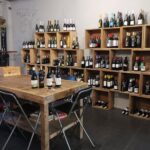
Also, this stop is near an old city wall area (the tour description ties it to a wall with a 2000-year-old timeline), or it’s framed as a lively portside-style bar scene. Either way, you get an intimate bodega or bar atmosphere rather than a tourist-food warehouse.


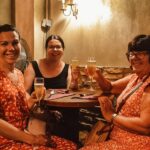
Euskal Etxea Taberna in El Born: Pintxos and Vermut with a Basque Angle
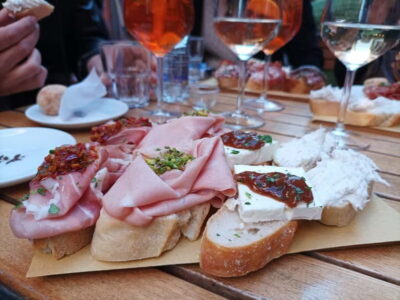
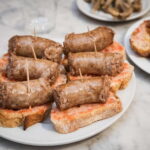
Next comes Euskal Etxea Taberna, a lively spot with Basque-style decor and a focused pintxo display. Here, you select a single pintxo, and it’s paired with a Basque-style vermut cocktail.
This stop is where the tour adds contrast. Barcelona is Catalan, but the culinary world around it includes strong Basque influences. Pintxos are finger-food style, meant to be chosen, not ordered like a full entree. That makes the experience feel hands-on and helps you taste multiple styles across the tour without overloading you at one location.
If you’re the kind of person who likes variety, this is a good mid-tour reset between Catalan classics and the seafood lean later on.
Restaurant Can Ramonet in Barceloneta: Fideuà in a 1700s Setting
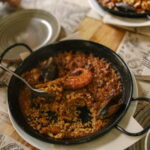
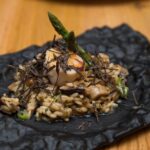
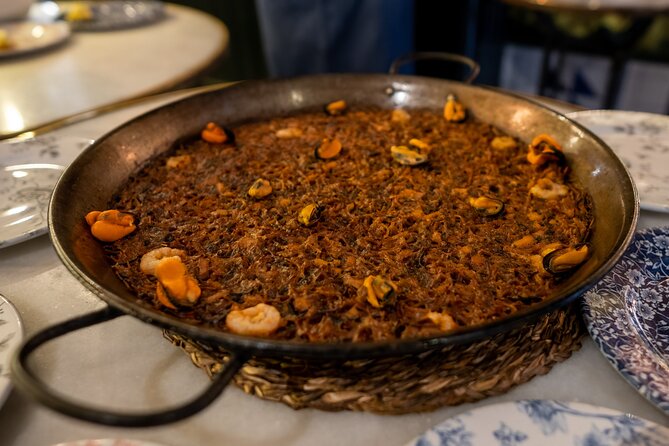
The tour’s seafood-forward moment is at Restaurant Can Ramonet, tied to Barceloneta’s Market supply and described as operating out of an old home dating back to the 1700s. It’s a third-generation restaurant, and you’ll enjoy Fideuà—Catalan noodle-paella style—served with alioli, plus a glass of cava.
Here’s the value of this stop. Fideuà is one of those dishes that helps you understand Barcelona beyond the generic tourist label of tapas. It shares the logic of paella but with noodles, and it often delivers that same comforting, seafood-and-sauce energy in a form that feels slightly more approachable.
The market sourcing angle is also useful. Even if you don’t know the difference between every local ingredient, you’ll start connecting the dots between food and place: you’re eating what the neighborhood is built to get and cook.
Forn de pa Balboa: Sweet Finish from a Citywide Bakery
The last food stop is at Forn de pa Balboa, a renowned bakery supplying pastries across the city. You’ll taste a traditional regional pastry for the sweet finish.
This is a small stop in time, but it’s a big one in payoff. After wine and multiple savory bites, a proper Catalan-style pastry closes the tour without feeling like a random dessert grab. It also gives you a flavor cue you can recognize later if you spot similar pastries on your own.
The walking segment between food stops: El Born and the sea edges
Between tastings, you walk through major sights and quieter alleyways. Expect medieval-style streets in El Born, plus key points like Passeig del Born, Santa Maria del Mar, and Basilica de la Merce sightlines as you move through the city web.
You’ll also learn about a medieval Gothic church built over 60 years, with bricks carried by hand from Montjuïc mountain—details like that make the architecture feel human, not just old. The tour also references a hidden carving called La Carassa, plus seaside charm around Marina Port Vell.
If you like photo stops and small discoveries, this is where you get them. If you hate walking, this part is the trade-off.
Price and Value: Is $114.93 Worth It?
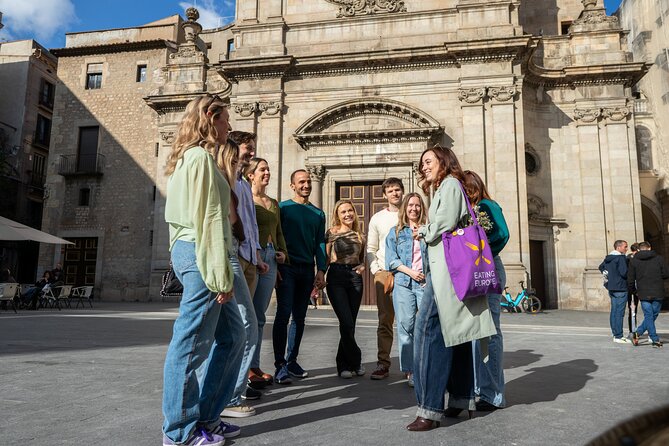
At $114.93 per person, this tour is positioned as a guided experience, not a budget tapas deal. You’re paying for:
- a small group format (up to 12),
- food and drink included (extra drinks aren’t required),
- and the added layer of cultural explanation tied to each neighborhood.
Now the honest catch: some people feel it’s pricey for tapas-sized quantities. That’s the gamble with any tour that includes multiple stops but keeps servings compact. If you expect a restaurant portion, you may feel underfed.
The way to make it feel like value is simple: show up ready to snack. Plan this as your dinner opener or a heavy late lunch, then consider a lighter meal afterward. Also, because the tour includes several tastings—like vermut, wine served via porrón, cava, pintxo selection, fideuà, and a pastry—you’re not leaving the table empty. You’re collecting multiple tastes instead of one big plate.
Drinks, Portions, and the No-Extra-Drinks Trick
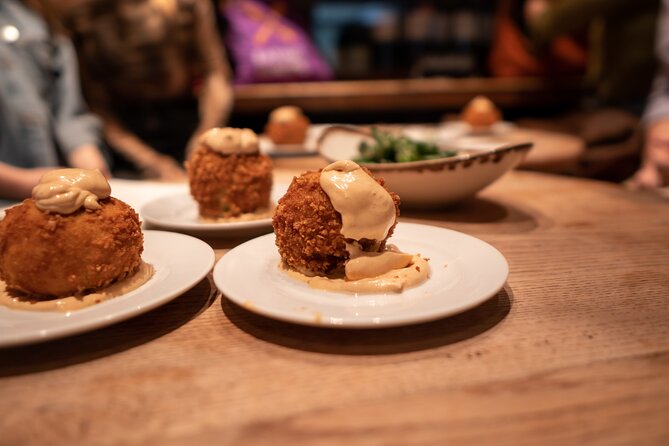
The drink list is part of what you’re buying:
- white wine from a porrón
- a Basque vermut cocktail
- cava paired with the fideuà
- and it’s designed so you likely won’t need extra drinks
This is a smart approach because it keeps the evening from spiraling in cost. Still, if you love strong pours, keep in mind the included drinks are set up to match the food, not to turn the tour into a drinking marathon.
Portion size is tapas logic: small, focused, and meant for tasting variety. If you’re hungry for a full sit-down meal, you’ll need to top up afterward.
Food Culture for People Who Want More Than a Plate
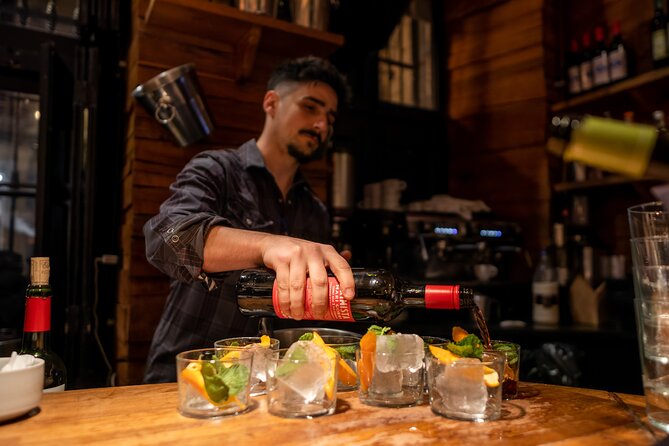
What I like most about this tour is the way it treats dishes as culture, not just calories. You hear why each dish fits: aubergine recipes tied to Catalan tastes, tomato bread logic in pa amb tomaquet, pintxos as a Basque-style habit, and fideuà as a Barceloneta seafood-styled comfort plate.
It’s also a good tour if you want a fast way to learn the city layout. The walking route ties neighborhoods together: Gothic Quarter to El Born to Barceloneta, with architecture and sea views showing up along the way.
Who This Tour Suits Best (and Who Might Prefer Something Else)
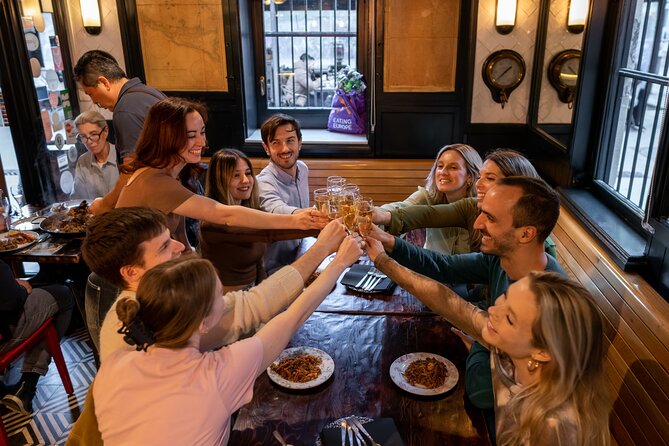
This works best if you:
- want English guide commentary that connects food to the city,
- enjoy a walk-and-snack structure,
- like cultural context alongside local plates,
- and appreciate small-group pacing.
It may feel less satisfying if you:
- want large meal portions,
- hate walking between stops,
- or think a tapas tour should function like an all-inclusive buffet.
Also note the dietary reality. The tour can accommodate vegetarian and gluten-free diets, but it says it cannot accommodate vegan diets. If you’re vegan, you’ll need a different option.
Practical Tips So You Don’t Trip Over the Details
Bring comfortable shoes. The route covers several areas and includes enough walking that you’ll feel it by the end. Since the tour ends near Barceloneta, you can turn the finish into an easy, scenic stroll along the marina if you still have energy.
Another small practical point: since it uses a mobile ticket, make sure your phone battery is charged. Not glamorous, but it saves time.
If you’re sensitive about timing, note that each tasting stop runs around 20 minutes, but the total experience includes travel/walking time between them—so build your schedule with that in mind.
Should You Book? My Decision Shortcut
Book it if you want a guided, small-group tapas-and-wine route that teaches you how Barcelona eats—Catalan bites first, then Basque-style contrast, then a Barceloneta seafood finish. The added value is the neighborhood storyline and the fact that you’re served drinks and dishes tied to place, not just random food stops.
Skip it (or shop alternatives) if you’re chasing maximum quantity for the price. A few people note the cost can feel high for tapas-sized servings, so go in with realistic expectations: this is sampling plus explanation, not a full dinner banquet.
If you’re flexible on timing, arrive ready to walk, and you enjoy asking questions, this is a strong way to get your bearings fast while eating your way across the city’s best streets.
FAQ
How long is the Barcelona Side Streets tapas and wine tour?
It runs for about 3 hours 30 minutes.
Where do I meet and where does the tour end?
You start at Plaça de la Mercè (Ciutat Vella, 08002 Barcelona) and finish at Plaça de la Barceloneta (Ciutat Vella, 08003 Barcelona).
What food and drinks are included?
The tour includes multiple tastings such as Catalan tapas and Fideuà, plus drinks including white wine served via porrón, Basque-style vermut, and cava, ending with a traditional pastry.
Are extra drinks included, or do I need money for more?
Extra drinks are not included. The tour description says you won’t need them, since the included drinks are part of the tasting plan.
Can the tour handle vegetarian or gluten-free diets?
Yes. It can accommodate vegetarian and gluten-free diets, but it says it cannot accommodate vegan diets.
Is this tour a small group?
Yes. The group size has a maximum of 12 travelers, and it’s offered in English.