REVIEW · AO NANG
Ao Nang: Hands-on Learn to Cook 3 Popular Thai’s street food
Book on GetYourGuide →Operated by Authentic Thai Cooking School · Bookable on GetYourGuide
Three Thai dishes, and you actually cook them.
This Ao Nang–area class feels like a real Thai family-style lesson in a clean open-air kitchen, not a rushed demo. I like that you choose your own 3-part menu (with vegan/vegetarian options), and I especially like the PDF recipe book you take home so you can rebuild the flavors later. One thing to consider: there’s no pickup, so plan your own ride to the kitchen.
You’ll also see the class has a strong “host-energy” vibe. In past sessions, instructors such as Gataii, New, Tu, Khun An, Thiwa, Poppy/Poopy, and Mac have led groups with clear English and lots of humor—so even if you’re a beginner, you’re not just standing around.
In This Review
- Key things to know before you cook
- Picking Your Menu: Soup, Pad Thai or Basil, and a Fresh Salad
- Inside the Clean Open-Air Family Kitchen in Krabi
- How the 150 Minutes Actually Work
- The Dishes That Make This Class Feel Like Thai Street Food
- Soup: Learn balance fast
- Pad Thai: The noodles are the lesson
- Holy basil and cashew styles: Aromas, heat, and speed
- Papaya or cucumber salad: Fresh, sour, and adjustable
- Spice Control, Vegan Swaps, and Gluten-Free Options
- English-Friendly, With Instructor Personality That Actually Helps
- Price and Value: Why $28 Can Be a Bargain
- Logistics You Should Plan For (No Pickup Means You Need a Ride)
- Who Should Book This Class in Ao Nang
- Should you book the Ao Nang street-food cooking class?
- FAQ
- How long is the cooking class?
- What dishes can I choose to cook?
- Is the class suitable for vegans, vegetarians, and gluten-free diets?
- What’s included in the price?
- Is pickup or transportation provided?
- Are alcoholic drinks included?
Key things to know before you cook
- Choose your own 3 dishes, typically one soup, one main (Pad Thai or basil/cashew style), and one salad (papaya or cucumber)
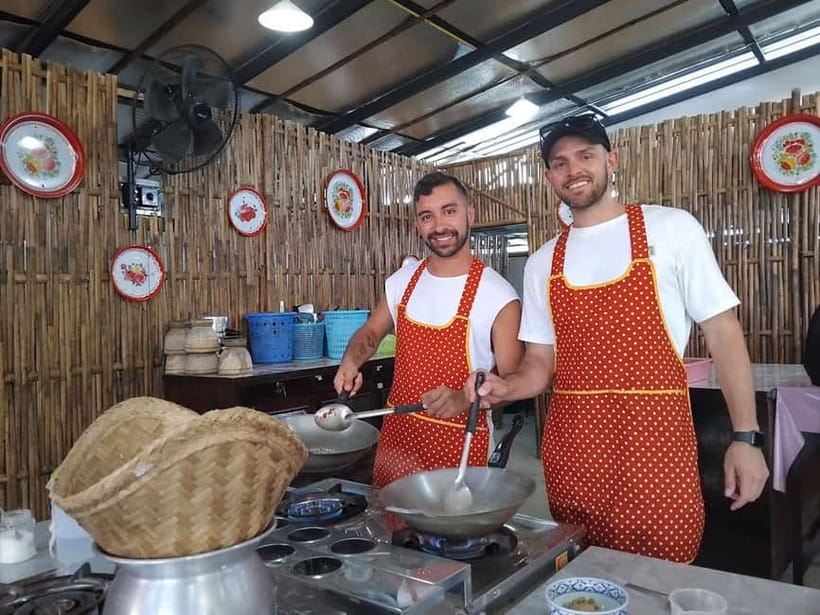
- Hands-on, not hands-off: you cook the components yourself and eat what you make
- Diet-friendly by request: vegan, vegetarian, and gluten-free options are available if you tell the operator in advance
- Open-air but tidy: a clean, family-style setup with help at the stations
- Go home with tools: a PDF recipe book plus photos of the activity
Picking Your Menu: Soup, Pad Thai or Basil, and a Fresh Salad
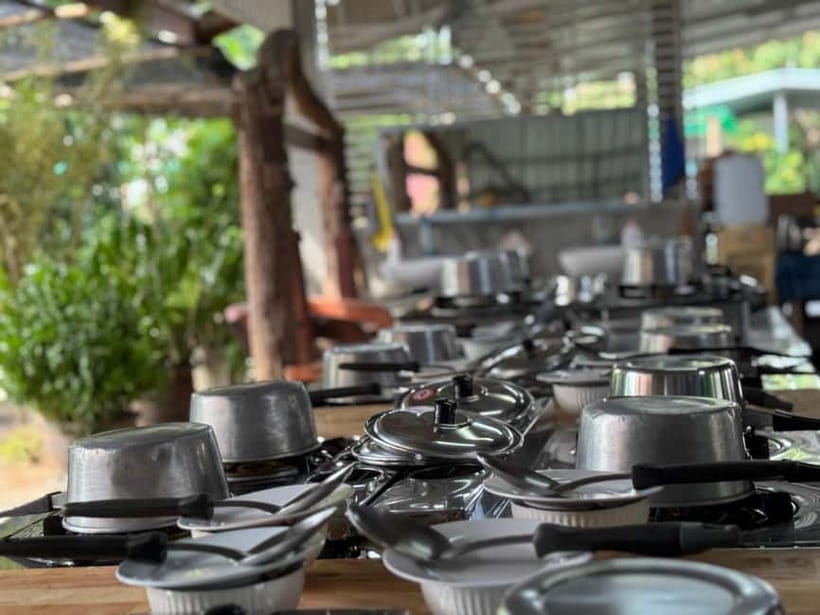
The biggest reason this class works is the menu freedom. You choose 3 popular Thai street-food style dishes—usually arranged as a soup + a main + a salad—so you don’t end up learning something you don’t actually want to eat.
For soup, you can pick between:
- a local chicken soup, or
- chicken in coconut milk soup
For the main course, you might choose:
- Pad Thai, or
- fried holy basil with chicken, or
- cashew nuts with chicken
And for the fresh bite at the end, you can choose either:
- papaya salad, or
- cucumber salad
Why this matters: Thailand’s flavors show up differently across these categories. Soup teaches balance (salt, sour, and aroma), the stir-fry or noodle dish teaches heat control and timing, and the salad teaches how Thai kitchens build freshness with citrus, herbs, and crunch.
If you’re thinking, I like Thai food, but I don’t know where to start—this structure gives you a starter kit that matches real street-food variety.
Inside the Clean Open-Air Family Kitchen in Krabi
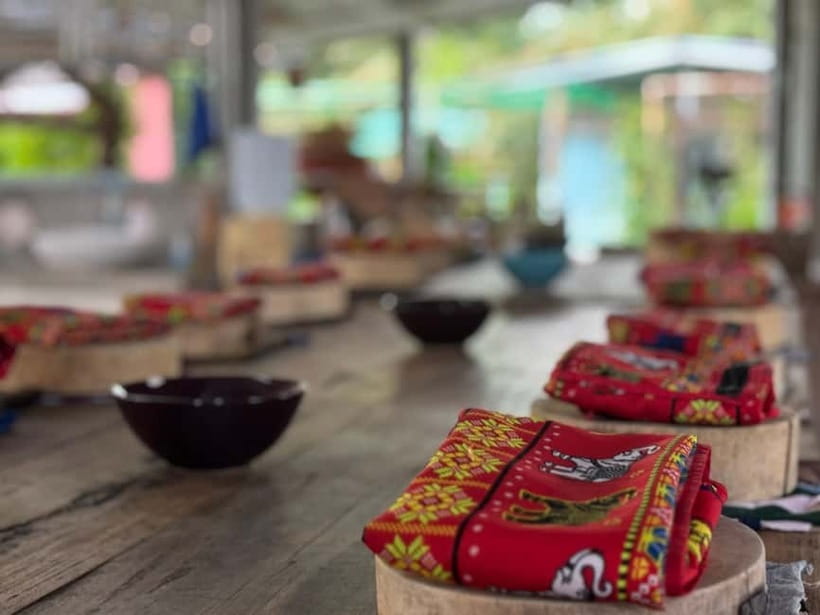
You cook in a traditional Thai family-style kitchen that’s described as clean and open-air. That’s a smart pairing with the food: Thai street food is about fresh aromatics, quick cooking, and bold seasoning, so being able to work with airflow and big prep stations helps the class move smoothly.
Another practical perk: you’re not stuck cleaning up after yourself. Several sessions mention that kitchen helpers handle the dishwashing/cleanup, so your role is mainly cooking and eating.
The class rhythm also tends to feel friendly rather than strict. Names that came up for past instructors include Gataii, New, Tu, Khun An, Poppy/Poopy, and Mac, and the consistent pattern is clear English plus patient guidance. Even when someone fumbles a sauce, the vibe stays playful and constructive.
One small consideration: since it’s open-air, you may want to dress for the weather and keep sunscreen handy if you’re cooking outside in strong sun.
How the 150 Minutes Actually Work
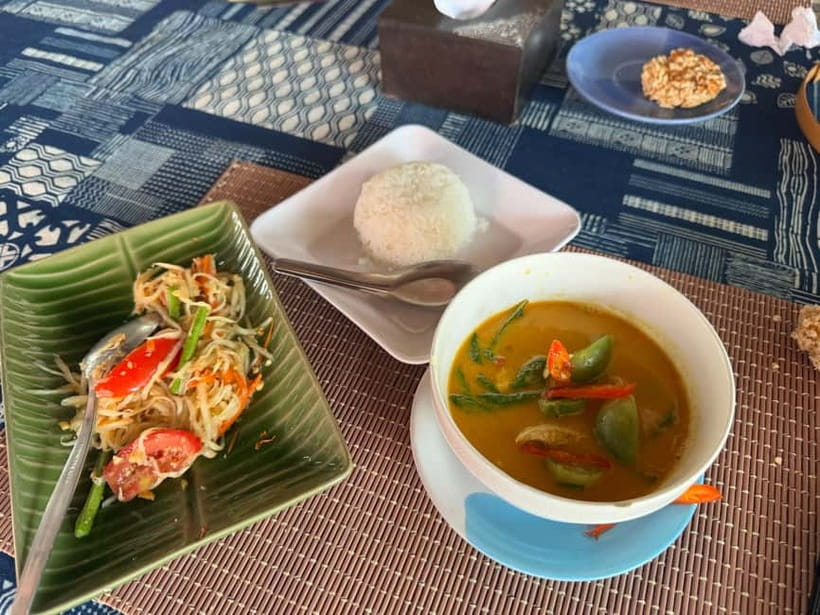
This is a 150-minute class, and it’s designed to keep moving while still giving you enough time to learn what’s happening. Here’s the typical flow, in plain terms.
1) Meet your instructor and prep your station
You’ll get introduced to the menu choices and the dishes you’ll cook. Expect step-by-step guidance in English, plus ingredient explanations like what gives a dish its sour kick, its sweet edge, or its herbal aroma.
2) Start cooking with real technique, not just assembly
Some ingredients are already prepped ahead of time (things like onion, carrot, lime were mentioned), which makes the class feel doable even if you’re not fast in the kitchen. You still get the important parts: mixing sauces, adjusting seasonings, and cooking with heat and timing.
3) Cook your soup first
A soup course is a good starting point because it teaches you how Thai flavor is built. Depending on your choice, you’ll work with either a local chicken soup base or a coconut milk version. You’ll learn what you’re tasting as you go, so the next dish isn’t a mystery.
4) Move to your main dish (noodles or stir-fry flavor)
If you picked Pad Thai, you’ll practice the noodle timing and the sauce balance that keeps it from tasting flat. If you picked fried holy basil with chicken or cashew nuts with chicken, you’ll focus on stir-fry pace and how the “wok” style flavor comes together quickly.
5) Finish with a salad you can reproduce at home
Papaya salad or cucumber salad is where the class really turns into a home-cooking win. These dishes depend on fresh components, citrus, herbs, and crunch. You’ll also see how Thai cooks adjust intensity—how much lime, how much chili, how much sweet—so you can dial it in later.
6) Eat together and take photos
You’ll get the chance to take photos during the activity. Photos are included, and you’ll also receive a PDF recipe book afterward. That mix is great: photos help you remember the process, and the PDF helps you recreate the flavors.
The Dishes That Make This Class Feel Like Thai Street Food
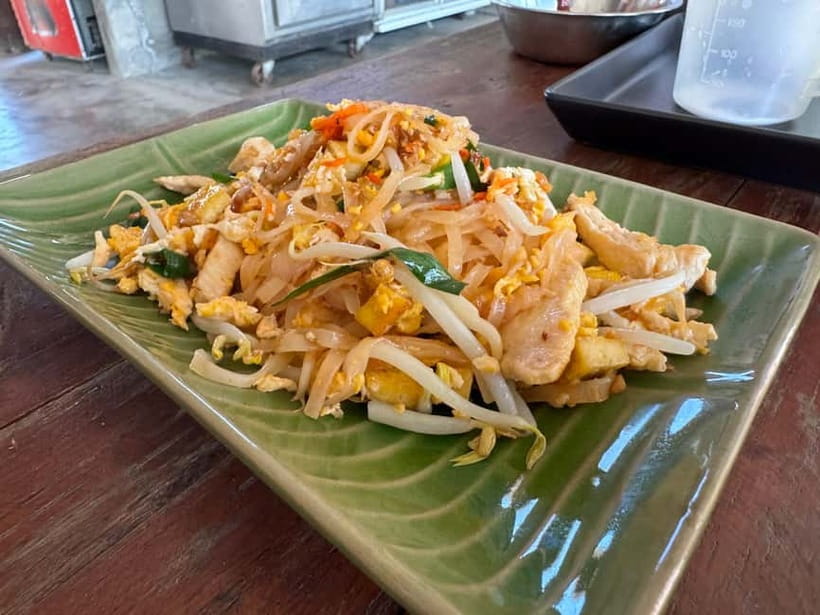
This isn’t just “Thai cooking class.” It’s Thai street-food style, which means the focus is on dishes people actually crave on the go.
Here’s what each category teaches you, and what to aim for while you cook:
Soup: Learn balance fast
Soup is often where Thai food wins people over. The coconut milk chicken soup option gives creamy richness, while the local chicken soup option leans more toward a lighter broth experience. Either way, you’ll learn how seasoning is layered, not dumped in at the end.
Pad Thai: The noodles are the lesson
Pad Thai is popular for a reason, and the class format helps you understand why. You’re not just learning a recipe—you’re learning timing and sauce integration, so the noodles pick up flavor instead of staying bland.
Holy basil and cashew styles: Aromas, heat, and speed
Holy basil fried with chicken and cashew-based dishes are the kind you’ll taste in markets. In this class, you get hands-on practice with quick cooking and fragrant aromatics—basil is the star, and the stir-fry pace matters.
Papaya or cucumber salad: Fresh, sour, and adjustable
Papaya salad and cucumber salad are both “street-smart.” They’re fast to eat, bright in flavor, and easy to customize. If you want a dish you can make at home without stress, salad is often the easiest win.
Spice Control, Vegan Swaps, and Gluten-Free Options
This class specifically welcomes vegans, vegetarians, and gluten-free participants if you tell the operator ahead of time. That’s a big deal because Thai flavors often rely on combinations of ingredients that can be swapped—if you plan it early.
From how past sessions were described, instructors have made substitutions thoughtfully, including changing sauces for vegetarian needs. Some classes mention meat-free versions using ingredients like tofu or eggs depending on the dish, which is useful to know if you’re avoiding meat but still want the texture and richness.
Also, you can often adjust spice. Several lessons mention customizing spiciness and preferences during cooking, so you’re not forced into one version of each dish.
My advice: when you message your dietary needs, say what you avoid (meat, dairy, gluten) and ask what the kitchen can do for each dish you’ll cook. That way your menu choices stay fun instead of stressful.
English-Friendly, With Instructor Personality That Actually Helps
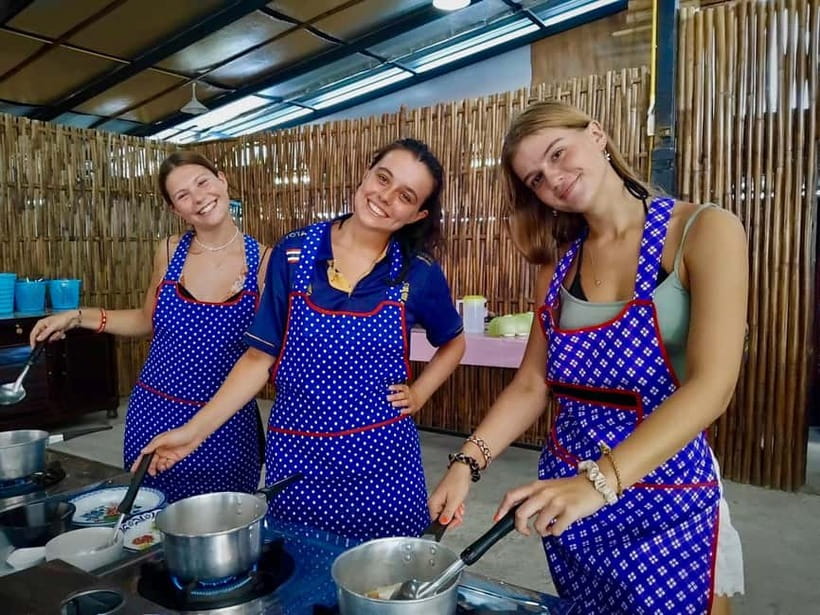
The instruction is English. Past hosts include Gataii, New, Tu, Khun An, Thiwa, Poppy/Poopy, and Mac, and the repeated pattern is that the teacher keeps it friendly and engaging.
I like this kind of teaching for one simple reason: Thai cooking includes plenty of small sensory checks. You’re constantly tasting, smelling, and adjusting. A relaxed, funny instructor helps you do that without fear.
Also, some sessions were described as smaller groups, which matters. When you’re not packed in tightly, you get more time to ask questions and watch how the sauce changes during cooking.
If you’re traveling solo, a small group vibe is still a plus. If you’re traveling with family, it’s a relief to know the class isn’t overly rigid.
Price and Value: Why $28 Can Be a Bargain
At $28 per person for 150 minutes, you’re paying for more than ingredients. You’re paying for:
- guided, hands-on cooking
- all ingredients for your chosen 3 dishes
- drinking water
- a PDF recipe book you can use later
- photos of the activity
Let’s translate that into value. If you’ve ever tried to recreate Thai food at home from memory, you know how easy it is to miss one key ingredient ratio. Here, you learn the build, not just the final taste. The recipe PDF is the part that keeps paying you back—because it’s not only about what to make, it’s about how to reproduce the flavor structure.
Another value factor: cleanup help is part of the bargain. When the kitchen team handles dishwashing, you spend your energy cooking instead of managing aftermath.
And yes, beer and alcohol are not included, though they’re available for purchase. If you’re thinking of adding drinks, factor that into your budget. Most people probably just want water and focus on learning.
Logistics You Should Plan For (No Pickup Means You Need a Ride)
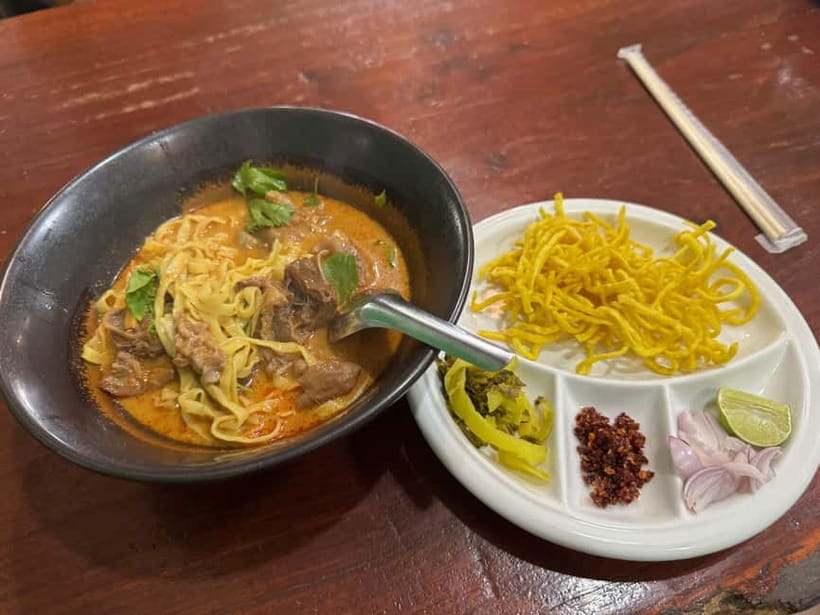
This is where you’ll want to be organized. There’s no pickup and no transportation service. So you’ll need to arrange your own way to the class location in Ao Nang/Krabi.
One practical note from experience descriptions: getting a ride back can be tricky, since catching a Grab afterward may not be the easiest. If you’re relying on rideshare, I’d plan a buffer and have a backup method.
Other rules to know:
- Pets are not allowed.
- Alcohol and drugs are not allowed.
- Alcohol is not included, but you can purchase it separately.
Who Should Book This Class in Ao Nang
This is ideal if you want a hands-on Thai food lesson that you’ll actually use later.
It’s a great fit for:
- food lovers who want to learn 3 dishes instead of a single recipe
- beginners who need clear English instruction and a structured menu
- vegetarians, vegans, or gluten-free diners who want to cook with adapted options
- families and mixed-skill groups (the class format works because everyone cooks their own chosen menu)
If you’re an advanced cook who already makes Pad Thai from scratch, you may still enjoy the class for the salad technique and the chance to learn the sauce logic behind the dishes. But you’ll likely get more value if you’re building your Thai repertoire.
Should you book the Ao Nang street-food cooking class?
If your goal is to go home with a real Thai cooking reference (not just a photo of your dish), I think this one is worth your time. The combination of hands-on cooking, a choose-your-own 3-dish menu, and a PDF recipe book hits the sweet spot for value.
I’d say book it if:
- you want soup + main + salad variety
- you need vegetarian/vegan or gluten-free flexibility
- you’d like an English-led class in a clean open-air kitchen
I’d hesitate only if:
- you don’t want to handle getting there on your own
- you’re expecting alcohol to be included in the price
If you can solve the transportation piece, you’ll leave with skills you can repeat and flavors you’ll remember.
FAQ
How long is the cooking class?
The class runs for 150 minutes.
What dishes can I choose to cook?
You can choose 3 dishes from options including: soup (local chicken soup or chicken in coconut milk soup), a main (Pad Thai, fried holy basil with chicken, or cashew nuts with chicken), and a salad (papaya salad or cucumber salad).
Is the class suitable for vegans, vegetarians, and gluten-free diets?
Yes. Vegan, vegetarian, and gluten-free options are available if you inform the operator about your dietary restrictions in advance.
What’s included in the price?
Included are the hands-on cooking class, all ingredients, drinking water, a PDF recipe book, and photos of the activity.
Is pickup or transportation provided?
No. There is no pickup or transportation service.
Are alcoholic drinks included?
No. Beer and alcohol are not included, though they’re available for purchase.